
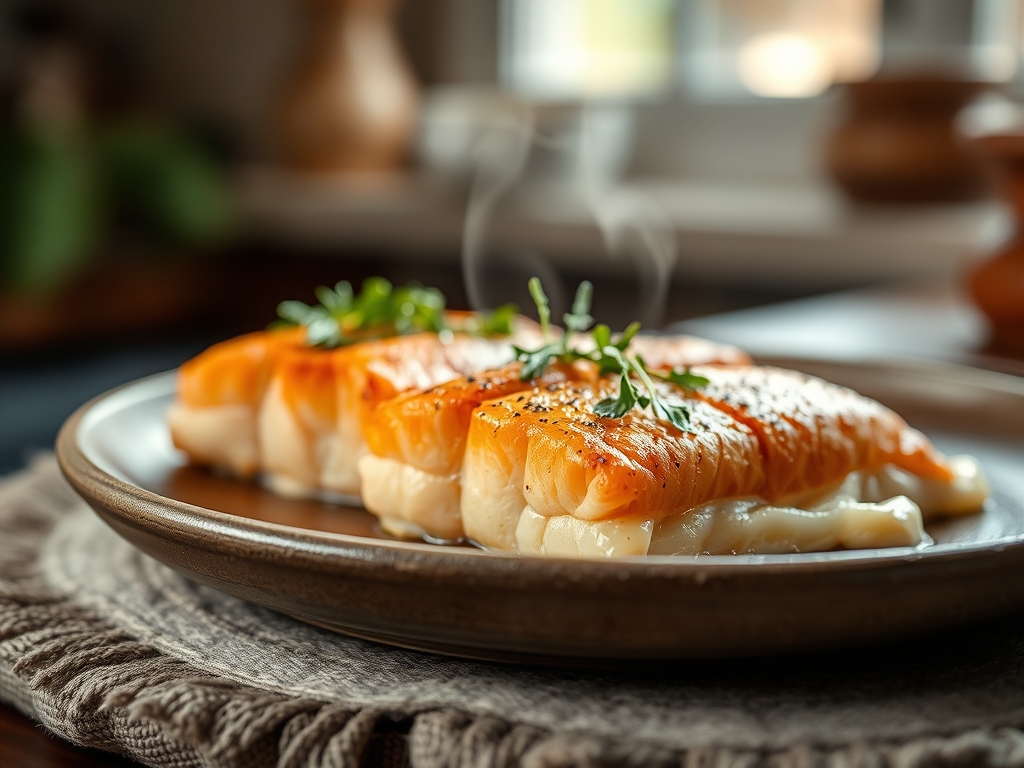
Imagine a fillet so buttery it practically sighs under the weight of your fork. We are talking about the crown jewel of the North Atlantic; a fish raised in the icy, high-velocity currents of the Faroe Islands. When you are hunting for the ultimate faroe salmon recipes, you are not just looking for a meal; you are looking for that specific, high-fat marbling that creates a melt-in-your-mouth texture. This is the "wagyu of the sea." The cold water ensures a slow growth cycle, which results in a deep orange hue and a clean, oceanic finish that lacks any muddy aftertaste. Today, we are going to master the art of the sear and the science of the emulsion to turn a simple protein into a five-star experience. We will explore how to harness the high fat content of this specific breed to achieve a shatteringly crisp skin while maintaining a translucent, tender center. Grab your apron and your favorite heavy-bottomed skillet; we are about to transform your kitchen into the best bistro in town with these seven essential secrets.
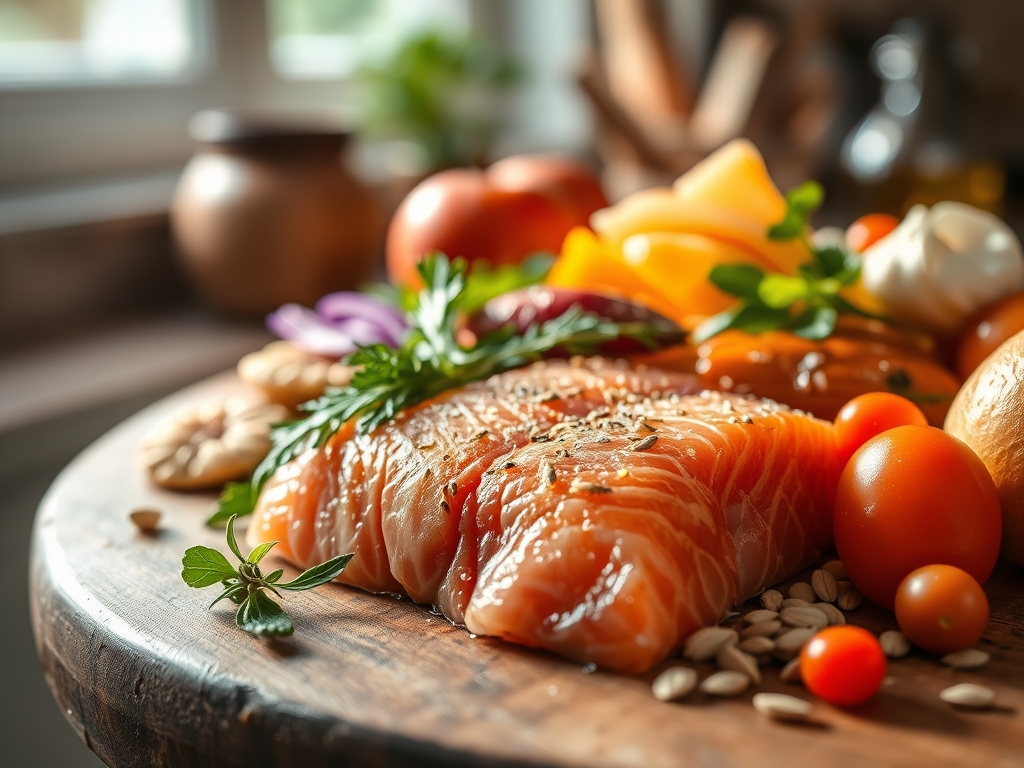
The Gathers:
Before we ignite the flame, we must respect the mise-en-place. For the quintessential faroe salmon recipes experience, start with two six-ounce center-cut fillets. You will need high-quality kosher salt; the irregular crystal size allows for better surface area coverage and moisture extraction. For our fat source, choose a neutral oil with a high smoke point like grapeseed or avocado oil; butter is for the finish, not the start. You will also need fresh aromatics: three cloves of garlic, a sprig of woody thyme, and a lemon for that essential hit of citric acid.
Smart Substitutions: If you cannot find fresh thyme, a sprig of rosemary offers a more resinous, piney backbone. For those avoiding dairy, a high-quality vegan butter substitute with a high oil-to-water ratio will still allow you to achieve a viscous pan sauce. If you want a piquant kick, swap the lemon for a lime or a splash of rice vinegar to cut through the rich lipids of the fish.
The Clock
The "Chef's Flow" is all about timing and temperature. Your prep time is a brisk ten minutes; this includes patting the fish dry and gathering your tools. The cook time is exactly eight to ten minutes depending on the thickness of the fillet. However, the most important part of the clock is the "Temper Time." You must pull your salmon from the refrigerator at least fifteen minutes before cooking. If you drop a cold fillet into a hot pan, the muscle fibers will contract violently, squeezing out the moisture and leaving you with a dry, tough result. By allowing the protein to reach room temperature, you ensure an even heat distribution from the edge to the center.
The Masterclass
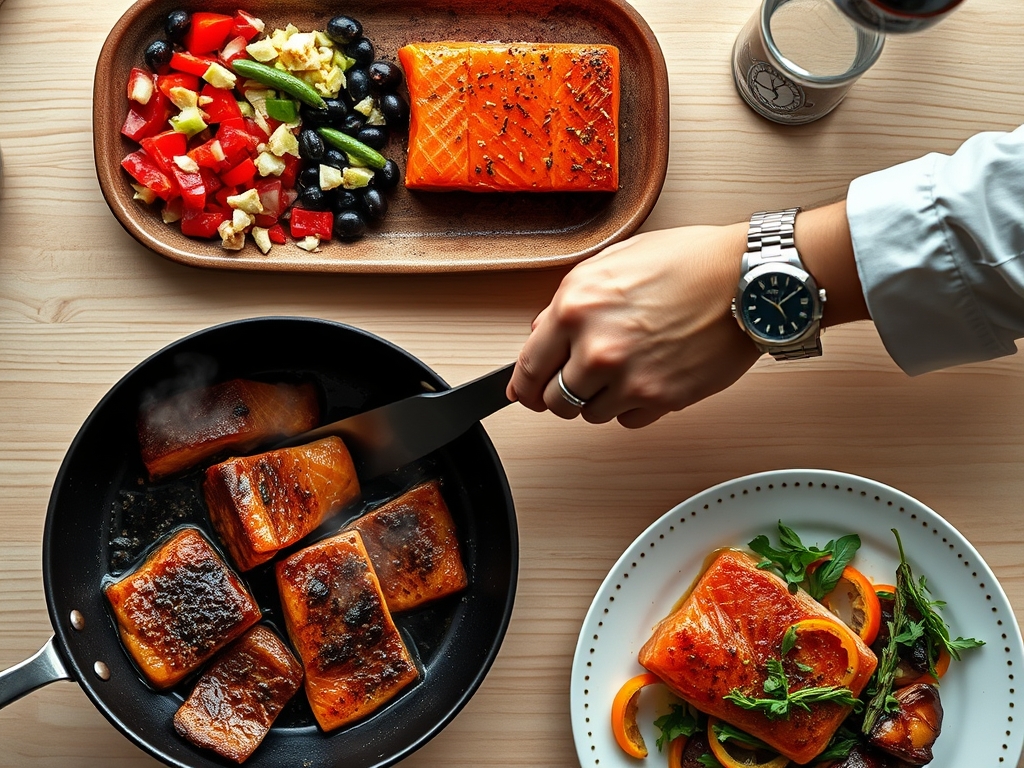
1. The Desiccation Ritual
Use a paper towel to press firmly onto the skin side of the salmon. You want the surface to be bone-dry. Moisture is the enemy of the Maillard reaction. If there is water on the skin, the energy of the pan will be wasted evaporating that water rather than browning the protein.
Pro Tip: This is known as surface evaporation. By removing surface moisture, you allow the skin to reach the 300 degree Fahrenheit threshold required for browning almost instantly, preventing the flesh from overcooking while you wait for a crunch.
2. The Weight of the Sear
Place your heavy-bottomed skillet over medium-high heat until the oil begins to shimmer. Lay the fish in away from you to avoid oil splatter. Immediately press down on the fillet with a flexible fish spatula for thirty seconds. Salmon skin tends to curl when it hits heat; pressing it flat ensures 100 percent contact with the cooking surface.
Pro Tip: This technique prevents protein contraction. By physically holding the fish flat, you force the collagen in the skin to break down into gelatin while it is pinned against the heat, resulting in an even, glass-like crispness.
3. The Render and Wait
Once the fish is in the pan, do not move it. You are waiting for the fat to render. Watch the side of the fillet; you will see the color change from translucent pink to opaque beige climbing up the side. When it reaches about 70 percent of the way up, it is time to flip.
Pro Tip: This is conductive heat transfer. The heat moves from the pan through the skin and into the fat layer. This slow rendering creates a self-basting environment that keeps the internal temperature stable.
4. The Aromatic Baste
Flip the fish gently using tongs. Drop a tablespoon of butter, your smashed garlic, and thyme into the pan. As the butter foams, tilt the pan and use a large spoon to pour that liquid gold over the crispy skin. This is where we infuse the fish with deep, nutty flavors.
Pro Tip: This is browning (beurre noisette). The milk solids in the butter caramelize, creating a complex flavor profile that complements the sweetness of the Faroe salmon. The aromatics are fat-soluble, meaning their flavors are carried directly into the fish via the butter.
5. The Thermal Finish
Remove the pan from the heat when the internal temperature hits 125 degrees Fahrenheit for medium-rare. Transfer the fillets to a warm plate and let them rest for three minutes. Do not skip this.
Pro Tip: This is thermal carryover. The residual heat on the exterior will continue to cook the center of the fish even after it leaves the pan, bringing the final temperature to a perfect 130-135 degrees.
The Deep Dive
Faroe salmon is a nutritional powerhouse, boasting high levels of Omega-3 fatty acids, Vitamin D, and B12. Because of its high fat content, it is naturally Keto and Paleo friendly. For a Vegan alternative, you can apply these same searing techniques to a thick "fillet" of king oyster mushroom or firm tofu, though you will need to add a drop of liquid smoke to mimic the oceanic depth. If you are Gluten-Free, simply ensure your seasonings are pure; salmon is naturally safe for you.
The Fix-It:
- White Stuff Oozing Out: This is albumin, a protein that escapes when the fish is cooked too fast or too hot. Fix: Lower your heat and ensure the fish is tempered before cooking.
- Skin Sticking: You likely tried to flip too early. The fish will naturally "release" from the pan once the skin is fully dehydrated and crisp.
- Soggy Skin: This happens if you cover the fish with a lid or sauce. Fix: Never cover the skin; serve your sauces as a base or on the side to maintain the crunch.
Meal Prep: To reheat salmon without it turning into a rubber puck, avoid the microwave. Use a low-temperature oven (275 degrees) with a splash of water in the dish, covered tightly with foil. This creates a gentle steam environment that rehydrates the fats without tightening the proteins.
The Wrap-Up
Mastering faroe salmon recipes is about more than just following a list; it is about understanding the harmony between heat and fat. By focusing on desiccation, pressure, and the aromatic baste, you turn a simple dinner into a culinary event. Remember to trust your senses; listen for the sizzle, watch the color climb, and always, always let it rest. You have the tools, the science, and the best fish in the world. Now, go make something incredible.
The Kitchen Table
Why is Faroe Island salmon better for searing?
Its higher fat content provides a built-in buffer against dry heat. This extra marbling allows the skin to become exceptionally crisp while the interior remains succulent and buttery, making it more forgiving than leaner wild varieties.
How do I prevent the salmon from smelling fishy?
Freshness is key, but you should also pat the fish dry and remove the gray "blood line" if desired. High-quality Faroe salmon should smell like a fresh ocean breeze, never pungent or sour.
Can I use a non-stick pan instead of stainless steel?
Yes, but you may sacrifice some of the crust. Stainless steel or cast iron provides better heat retention, which is essential for that professional-grade, shatteringly crisp skin found in high-end restaurant faroe salmon recipes.
What is the best way to tell if it is done?
Use a digital thermometer to hit 125 degrees Fahrenheit for medium-rare. Alternatively, a cake tester inserted into the thickest part should feel warm (not hot) when touched to your bottom lip, indicating a perfect translucent center.