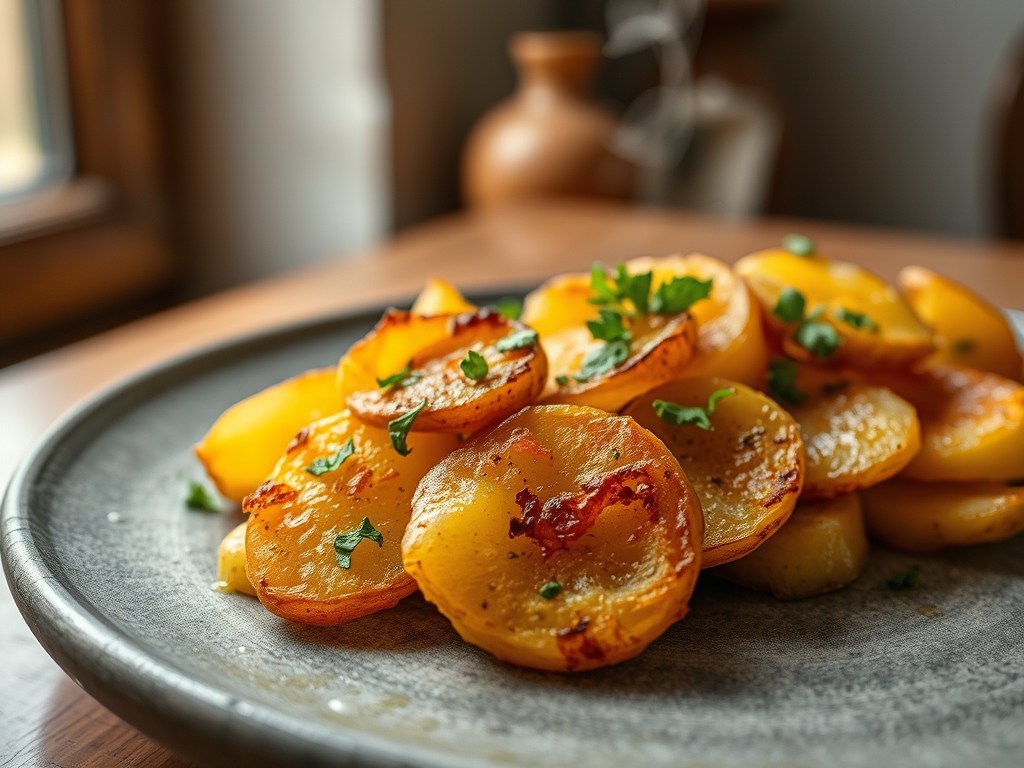
The sound of a perfectly executed potato hitting a hot pan is the siren song of the kitchen. It is a violent, rhythmic sizzle that promises a glass like exterior and a center as fluffy as a cloud. When you are hunting for the ultimate potato recipes pan fried style, you are not just looking for dinner; you are looking for the Maillard reaction in its most glorious form. We have all been there: staring at a pile of soggy, grey spuds that stuck to the pan. That ends today. We are going to master the art of the starch, turning the humble tuber into a golden, architectural masterpiece. This is about more than just heat; it is about moisture management and surface area. We are diving deep into the chemistry of the Russet and the waxiness of the Yukon Gold to ensure every bite provides that shatteringly crisp satisfaction you crave. Grab your favorite heavy bottomed skillet and let us get to work.
The Gathers:
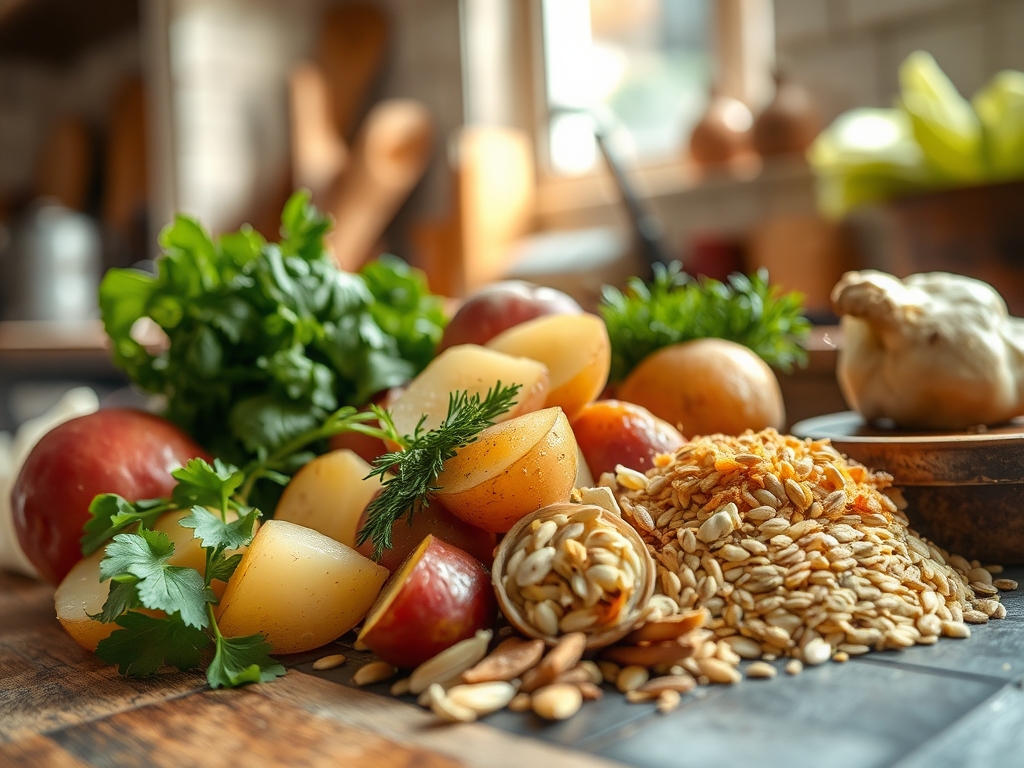
To achieve greatness, your mise-en-place must be precise. Start with high starch potatoes like Russets for maximum fluff or Yukon Golds for a buttery, viscous interior. You will need a high smoke point fat; avocado oil or rendered duck fat are superior choices because they stay stable at the temperatures required to induce browning without scorching. Fresh aromatics are non negotiable. Think woody herbs like rosemary and thyme that can withstand the heat, along with smashed garlic cloves to infuse the oil.
Smart Substitutions: If you are avoiding nightshades, Japanese sweet potatoes offer a similar starch profile but with a higher sugar content, meaning they will caramelize faster. Instead of butter for finishing, try a cold pressed walnut oil for a piquant nuttiness, or use a microplane to zest some lemon over the top for a bright, acidic lift that cuts through the richness.
The Clock
Total preparation takes approximately 15 minutes, while the active cooking time spans 20 to 25 minutes. This is what I call the Chef's Flow. The first 10 minutes are dedicated to the "Cold Start" or the parboil, which pre-gelatinizes the starches. The final 15 minutes are the "High Heat Phase" where you develop the crust. Do not rush the cooling period between boiling and frying; allowing the steam to escape for 5 minutes is the secret to a dry surface that wont stick.
The Masterclass
1. The Precision Cut
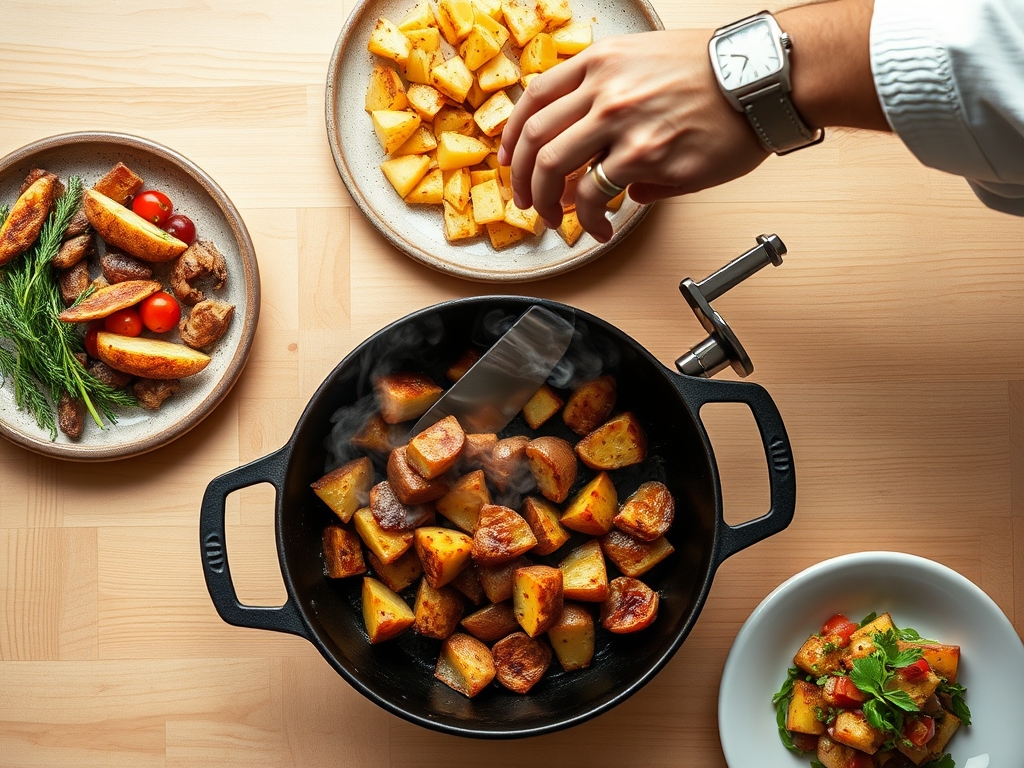
Uniformity is your best friend. Use a sharp chef knife or a bench scraper to ensure every cube is exactly one inch. This ensures they cook at the same rate, preventing the tragedy of having half your pan burnt while the other half is raw.
Pro Tip: This prevents enzymatic browning. By keeping your cuts uniform and immediately submerging them in cold, salted water, you wash away excess surface starch that would otherwise gummy up the pan.
2. The Alkaline Parboil
Drop your potatoes into boiling water spiked with half a teaspoon of baking soda. Boil until the edges are just starting to fray but the structure remains intact.
Pro Tip: The baking soda breaks down the potato's pectin. This creates a starchy slurry on the surface that, once fried, increases the surface area for the Maillard reaction, leading to a thicker crust.
3. The Rough Up
Drain the potatoes in a colander and give them a vigorous shake. You want the edges to look fuzzy and battered. This is where the texture is born.
Pro Tip: This increases the topography of the potato. More nooks and crannies mean more places for the hot fat to pool, creating those coveted "crunchy bits."
4. The Fat Infusion
Heat your heavy-bottomed skillet over medium high heat until the oil shimmers. Add your aromatics now to scent the oil, but remove them before they turn black.
Pro Tip: This is called lipid infusion. The fat acts as a delivery vehicle for the fat soluble compounds in the herbs, ensuring the flavor penetrates the potato rather than just sitting on top.
5. The Single Layer Rule
Carefully place the potatoes in the pan. Do not crowd them. If you hear the sizzle drop in volume, you have added too many.
Pro Tip: Crowding the pan causes the temperature to plummet, leading to steaming rather than frying. You want to maintain a high thermal mass in the skillet to snap the starches into a crisp shell.
6. The Patient Sear
Resist the urge to toss them immediately. Let them sit for at least 4 to 5 minutes until they naturally release from the pan surface. Use tongs to flip them individually.
Pro Tip: This utilizes thermal carryover. The heat travels from the outside in, slowly cooking the center while the exterior undergoes intense dehydration to become crispy.
7. The Butter Baste
In the last 2 minutes of cooking, add a knob of cold butter and your fried aromatics back into the pan. Use a spoon to baste the foaming butter over the potatoes.
Pro Tip: Butter contains milk solids that caramelize quickly. This adds a final layer of complex, nutty flavor and a glossy finish that oil alone cannot achieve.
8. The Final Seasoning
Remove the potatoes to a wire rack rather than a paper towel. Immediately hit them with fine sea salt while the oil is still wet on the surface.
Pro Tip: A wire rack prevents steam reabsorption. If you put hot potatoes on a flat surface, the bottom side will trap steam and turn soggy within seconds.
The Deep Dive
Macro Nutrition: One serving of these pan fried potatoes provides approximately 220 calories, 4g of fiber, and 3g of protein. They are a powerhouse of potassium, often containing more than a banana.
Dietary Swaps: For a Keto alternative, swap the potatoes for radishes or cauliflower florets; the roasting time will decrease by half. For a Vegan version, replace the butter finish with a high quality vegan butter or a drizzle of truffle oil. This recipe is naturally Gluten-Free.
The Fix-It:
- Potatoes sticking? Your pan wasn't hot enough or you tried to flip too early. Wait for the crust to form; it will release itself.
- Burnt outside, raw inside? Your heat is too high. Lower the flame and use a lid for 2 minutes to trap heat, then remove to crisp.
- Greasy texture? The oil temperature dropped too low. Ensure you use a digital scale to measure portions so you don't overload the pan.
Meal Prep: To reheat and maintain "day-one" quality, avoid the microwave. Use an air fryer at 375 degrees for 4 minutes or a dry skillet over medium heat. This re-activates the fats without making the starch viscous or gummy.
The Wrap-Up
Mastering potato recipes pan fried style is a culinary rite of passage. It is the perfect balance of heat management and patience. Once you understand how to manipulate the starch and pectin, you can turn any meal into a restaurant quality experience. Whether you are serving these alongside a medium rare steak or as the star of a weekend brunch, the crunch will speak for itself. Go forth and fry with confidence!
The Kitchen Table
Why are my pan fried potatoes soggy?
Sogginess usually results from overcrowding the pan or failing to dry the potatoes before frying. Excess moisture creates steam, which prevents the Maillard reaction. Always pat your potatoes dry and cook in batches to maintain high pan temperatures.
Do I have to soak potatoes before frying?
Soaking is highly recommended. It removes excess surface starch that can cause the potatoes to stick together and burn before the center is cooked. A 30 minute soak in cold water ensures a much crispier, cleaner finish.
What is the best oil for frying potatoes?
Use an oil with a high smoke point like avocado, grapeseed, or clarified butter (ghee). These oils can handle the high heat necessary for crisping without breaking down or producing bitter, burnt flavors in your dish.
How do I keep potatoes from sticking to the pan?
Ensure your skillet is properly preheated before adding fat. Once the fat is shimmering, add the potatoes and do not move them until a golden crust has formed. The potato will naturally release from the surface once it is ready.