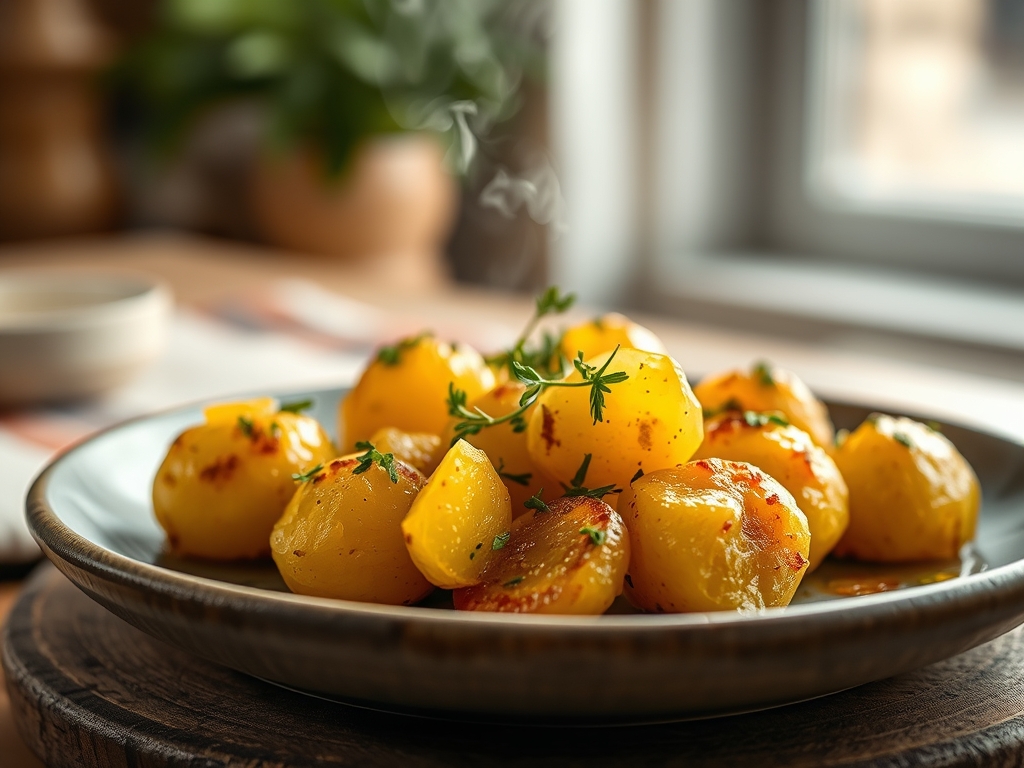
Imagine the precise moment a fork tines through a golden skin to reveal a texture so buttery it practically sighs. We are not talking about the mealy, giant russets of a Tuesday night baked potato. We are diving into the world of small yellow potato recipes where the starch is waxy, the skin is paper thin, and the interior is a dense, creamy dream. These tiny gems are the darlings of the culinary world because they hold their shape under pressure while absorbing every drop of fat and herb you throw at them. Whether you are aiming for a crisp, shattered exterior or a fondant-style melt, these tubers are your canvas. They possess a natural sweetness and a low-moisture profile that makes them superior for high-heat roasting and delicate poaching alike. Today, we are moving past basic boiling and into the realm of professional technique. We will use heat, salt, and fat to transform these humble roots into a side dish that outshines the main course. Grab your apron; we are about to make magic.
The Gathers:
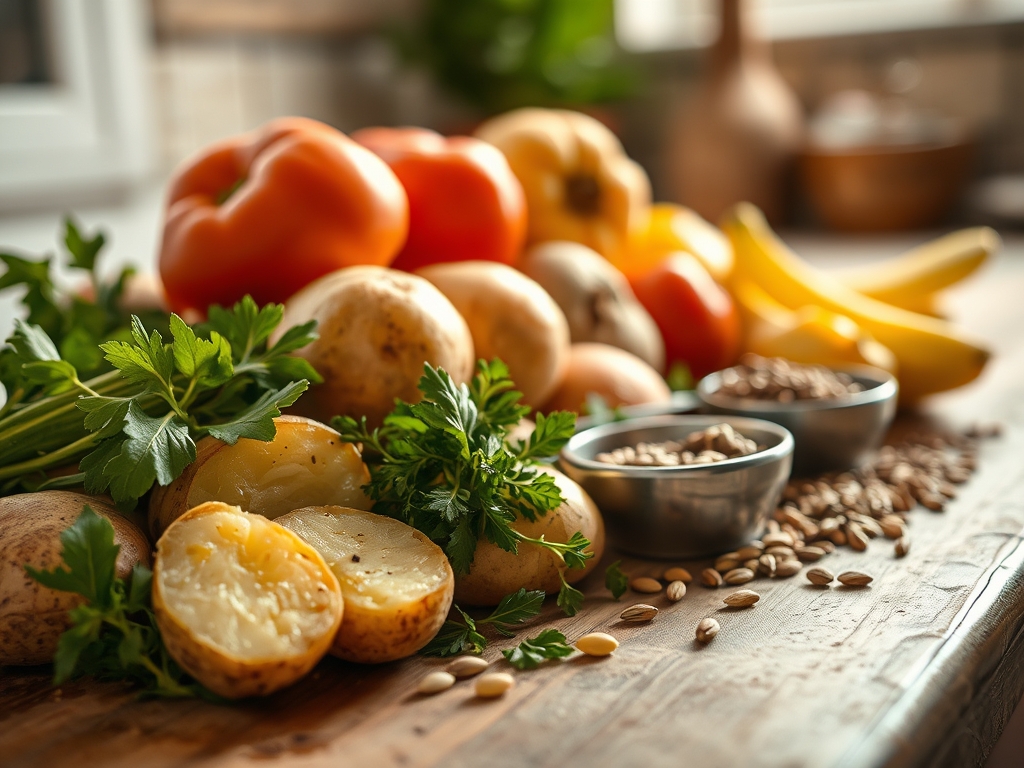
To achieve the perfect result, your mise-en-place must be intentional. You will need two pounds of C-size yellow potatoes; these are typically between one and two inches in diameter. Their high amylopectin content ensures they remain succulent rather than crumbly. For the fat, we use a combination of clarified butter for its high smoke point and extra virgin olive oil for its piquant polyphenols.
You will also need a handful of fresh rosemary and thyme sprigs. Do not chop them yet; we want to infuse the oil rather than burn the leaves. Sea salt is non-negotiable here. Use a coarse Maldon for finishing to provide a structural crunch, and a fine Himalayan salt for the initial seasoning to ensure even penetration.
Smart Substitutions: If you are avoiding dairy, replace the butter with duck fat or schmaltz to achieve an even deeper Maillard reaction. For a citrus profile, swap the rosemary for preserved lemon peel and a dusting of sumac. If you lack fresh herbs, a high-quality dried herbes de Provence will suffice, provided you bloom them in the warm oil first to release their volatile aromatic compounds.
The Clock (H2)
The "Chef's Flow" is all about overlapping tasks to minimize downtime. Total active prep time is approximately 15 minutes, while the total cook time spans 40 to 50 minutes.
Start by preheating your oven and your heavy-bottomed skillet simultaneously. While the metal absorbs thermal energy, you will wash and dry the potatoes. Drying is the most critical step; water is the enemy of the crisp. Once the potatoes enter the oven, you have a 25-minute window to prepare your garnishes or a bright gremolata. This sequence ensures that the potatoes hit the table the exact moment they reach their peak internal temperature of 210 degrees Fahrenheit.
The Masterclass (H2)
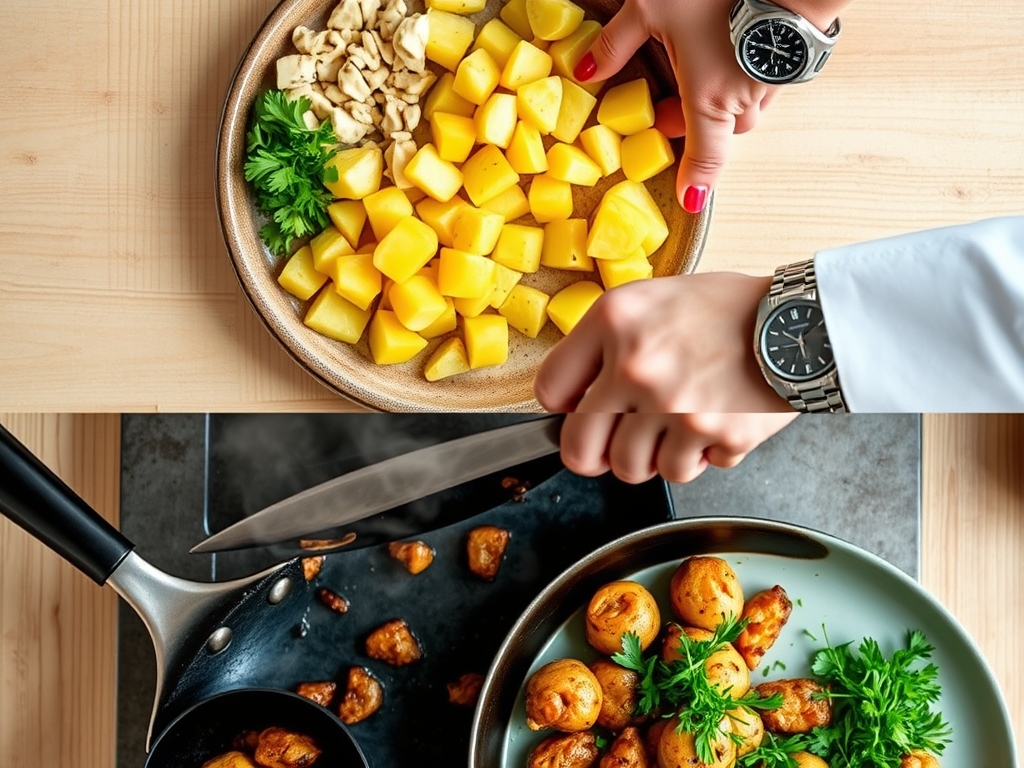
1. The Parboil and Shock
Place your potatoes in a saucier filled with cold, heavily salted water. Bring to a boil and simmer for exactly eight minutes. This partially gelatinizes the exterior starch.
Pro Tip: This process, known as retrogradation, allows the surface starch to dehydrate more effectively later, resulting in a glass-like crunch.
2. The Rough-Up
Drain the potatoes and use a bench scraper or a wooden spoon to toss them vigorously in the colander. You want the edges to look frayed and fuzzy.
Pro Tip: Increasing the surface area through mechanical abrasion creates more sites for the Maillard reaction, the chemical bridge between amino acids and reducing sugars.
3. The Fat Infusion
In a small pan, warm your oil and butter with smashed garlic cloves and herb sprigs until the garlic is golden. Strain the solids and toss the potatoes in this liquid gold.
Pro Tip: Fat acts as a thermal conductor, ensuring that the heat from the oven is distributed evenly across every nook and cranny of the potato skin.
4. The High-Heat Roast
Spread the potatoes on a preheated baking sheet. Do not crowd them; they need airflow to prevent steaming. Roast at 425 degrees Fahrenheit for 25 minutes.
Pro Tip: Using a preheated tray triggers thermal carryover immediately, preventing the bottoms from becoming soggy while the tops brown.
5. The Smash Technique
Halfway through roasting, use a flat-bottomed glass or a meat mallet to gently press each potato until it cracks but stays in one piece.
Pro Tip: This exposes the creamy interior to direct heat, creating a contrast between the viscous center and the shattered edges.
6. The Acid Brightener
Two minutes before removing from the oven, spritz the potatoes with a teaspoon of champagne vinegar or lemon juice.
Pro Tip: Acid cuts through the heavy lipids and balances the pH, making the savory flavors of the potato pop on your palate.
7. The Microplane Finish
Once out of the oven, use a microplane to grate fresh Parmesan or cured egg yolk over the hot potatoes.
Pro Tip: The residual heat is just enough to melt the proteins without breaking the fats, creating a lacy, savory crust.
8. The Aeration Toss
Transfer the potatoes to a large metal bowl and toss them three or four times in the air.
Pro Tip: This quick aeration allows steam to escape, which prevents the crispy skins from softening as they sit.
9. The Herb Dusting
Now is the time for finely minced parsley or chives. Add them only at the very end to preserve their bright green color and delicate oils.
Pro Tip: Fresh herbs contain enzymes that degrade quickly under high heat; adding them post-roast keeps the flavor profile "high-tone."
10. The Salt Graduation
Finish with a final sprinkle of flaky sea salt from a height of twelve inches.
Pro Tip: Salting from a height ensures an even distribution, preventing "salt pockets" and ensuring every bite has a consistent electrolyte balance.
The Deep Dive (H2)
Macro Nutrition: Small yellow potatoes are a powerhouse of complex carbohydrates and potassium. One serving provides roughly 110 calories, 3 grams of fiber, and more vitamin C than a medium tomato. Because we use healthy fats like olive oil, the satiety index of this dish is incredibly high.
Dietary Swaps: For a Keto-friendly version, you can apply these same roasting techniques to cauliflower florets or radishes; though the starch content differs, the flavor infusion remains effective. For a Vegan approach, use avocado oil or a high-quality vegan butter substitute enriched with nutritional yeast for that "cheesy" depth.
The Fix-It:
- Soggy Potatoes: Usually caused by overcrowding the pan. Fix: Return them to a high-heat oven on a wire rack to allow 360-degree airflow.
- Burned Garlic: If your garlic turned bitter, it was likely added too early. Fix: Toss the potatoes in a fresh herb oil post-roast to mask the bitterness.
- Internal Rawness: If the outside is dark but the inside is hard, your oven was too hot. Fix: Cover with foil and lower the heat to 350 to allow the centers to steam.
Meal Prep: To reheat, avoid the microwave at all costs. It turns the starch into a rubbery mess. Instead, use an air fryer at 375 degrees for 4 minutes or a dry heavy-bottomed skillet over medium heat to re-crisp the skins.
The Wrap-Up (H2)
Mastering small yellow potato recipes is a rite of passage for any home cook looking to elevate their game from "good" to "gourmet." By understanding the science of starch and the power of the right tools, you have turned a pantry staple into a culinary masterpiece. These potatoes are crunchy, creamy, and undeniably addictive. Now, go forth and dominate your next dinner party with the confidence of a seasoned chef!
The Kitchen Table (H2)
Do I need to peel small yellow potatoes?
No, the skins on yellow potatoes are extremely thin and delicate. Leaving them on provides essential fiber and creates the perfect vessel for a crispy, golden exterior when roasted or fried.
Why are my roasted potatoes sticking to the pan?
This usually happens if the pan wasn't preheated or if you didn't use enough fat. To fix it, let the potatoes sit for two minutes out of the oven; the steam will naturally release them.
Can I use this method for red potatoes?
Yes, red potatoes have a similar waxy texture and low starch content. However, yellow potatoes generally have a more "buttery" flavor profile that complements the roasting process better than the earthier red variety.
How do I make them extra crispy?
The secret is the "rough-up" step. By shaking the parboiled potatoes to create a starchy mash on the surface, you create more surface area for the oil to crisp up in the oven.