
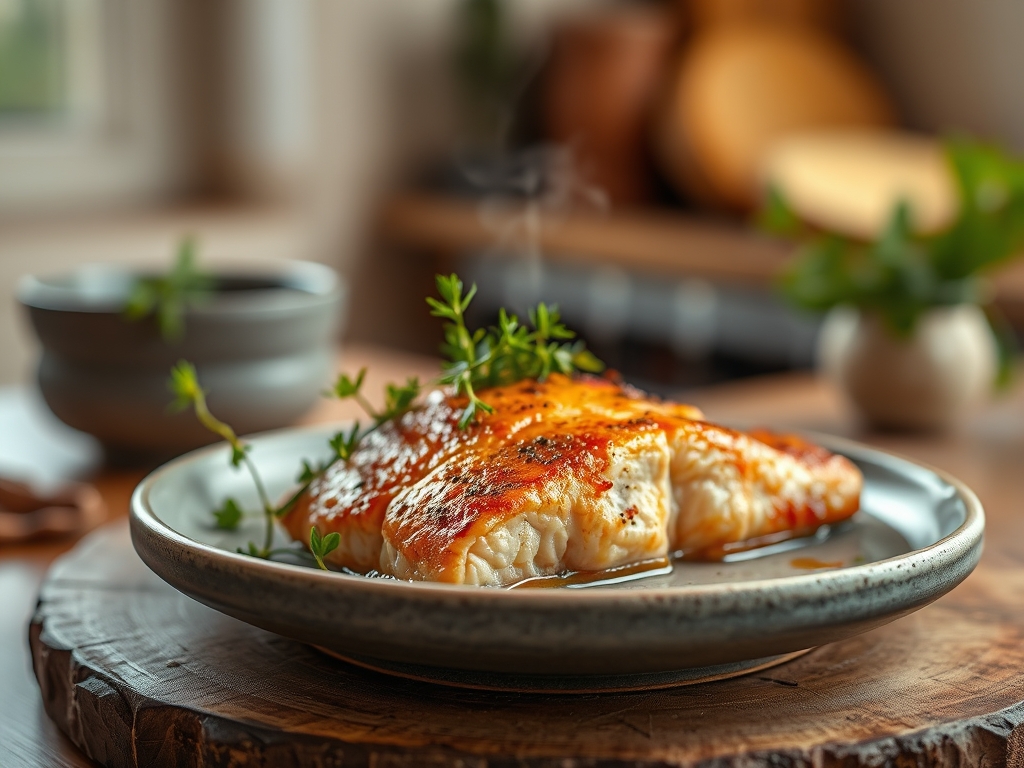
Picture this: you have just walked through the door after a marathon day, your brain is essentially static noise, and the only thing standing between you and a takeout delivery fee is a solid block of ice in your freezer. We have all been there, staring at those vacuum-sealed fillets like they are ancient artifacts. But here is the secret that professional chefs keep under their hats: you do not need a four-hour thaw to achieve a flaky, butter-soft texture. In fact, mastering frozen salmon recipes oven techniques is the ultimate culinary power move for the modern, busy epicurean. We are talking about transforming a frozen protein into a piquant, restaurant-quality masterpiece in under thirty minutes. By leveraging the physics of thermal conductivity, we can bypass the soggy "drip loss" associated with slow thawing and lock in those precious omega-3 fatty acids. This is not just about convenience; it is about using controlled heat to create a pristine, succulent center while the exterior develops a gorgeous, caramelized crust. Get ready to turn your kitchen into a high-efficiency laboratory of flavor where the freezer is your best friend and the oven is your primary scientific instrument.
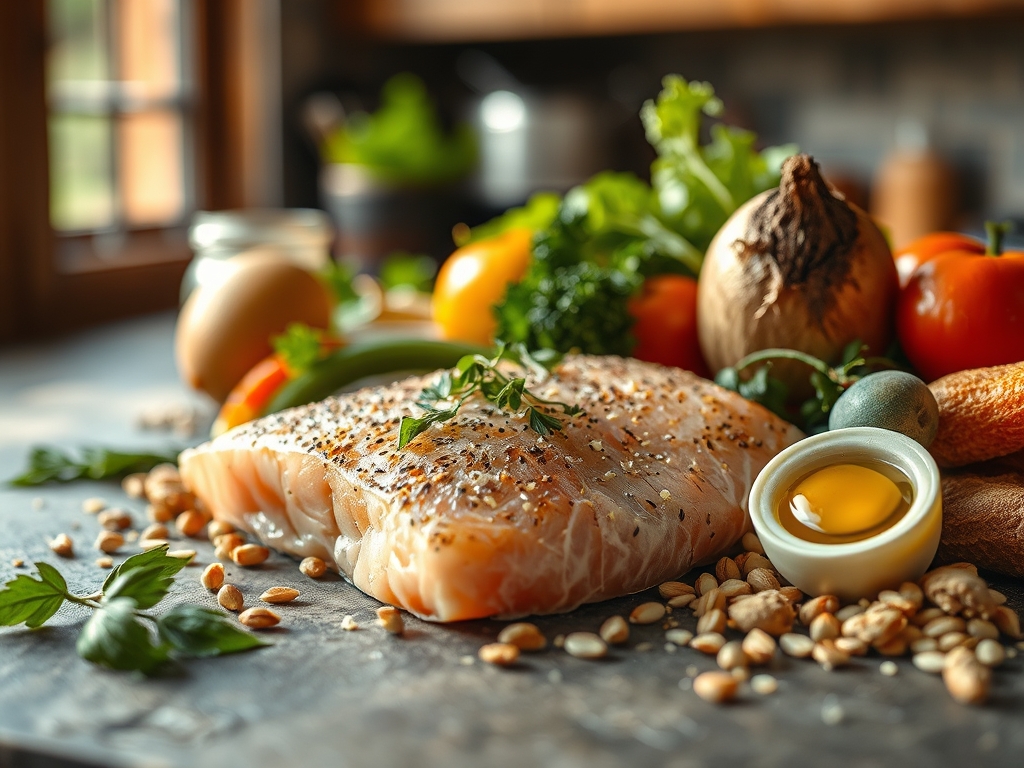
The Gathers:
To execute these hacks, your mise-en-place must be precise. Start with high-quality, flash-frozen Atlantic or Sockeye fillets; look for the "frozen at sea" label to ensure the cellular structure remains intact. You will need a high-smoke-point lipid, such as avocado oil or ghee, to facilitate heat transfer without acrid oxidation. For the aromatics, gather fresh dill, a bulb of garlic, and a bright lemon. You will also need coarse kosher salt; the larger crystal size allows for better moisture control on the fish surface. Reach for your microplane to zest the citrus and a digital scale if you are portioning out specific macronutrients.
Smart Substitutions: If you are out of fresh lemons, a splash of white balsamic vinegar provides the necessary acidity to cut through the viscous fats of the salmon. No fresh dill? Swap in dried tarragon or even a dusting of smoked paprika for an earthy, deep profile. If you prefer a dairy-free richness, replace butter with a dollop of thick tahini or a drizzle of toasted sesame oil to infuse an umami-forward punch into the dish.
The Clock
The "Chef's Flow" is all about overlapping tasks to minimize downtime. Your total active prep time is a mere five minutes, while the oven does the heavy lifting for twenty to twenty-five minutes.
0-5 Minutes: Preheating and Seasoning. While the oven reaches its target temperature, you are preparing your parchment sling and gathering your spices.
5-15 Minutes: The Initial Steam. This phase uses high heat to defrost the exterior and begin the internal temperature climb.
15-25 Minutes: The Finishing Sear. This is when we introduce fats and aromatics to trigger the Maillard reaction.
By the time you have set the table and poured a glass of crisp Sauvignon Blanc, the salmon is resting and ready for service.
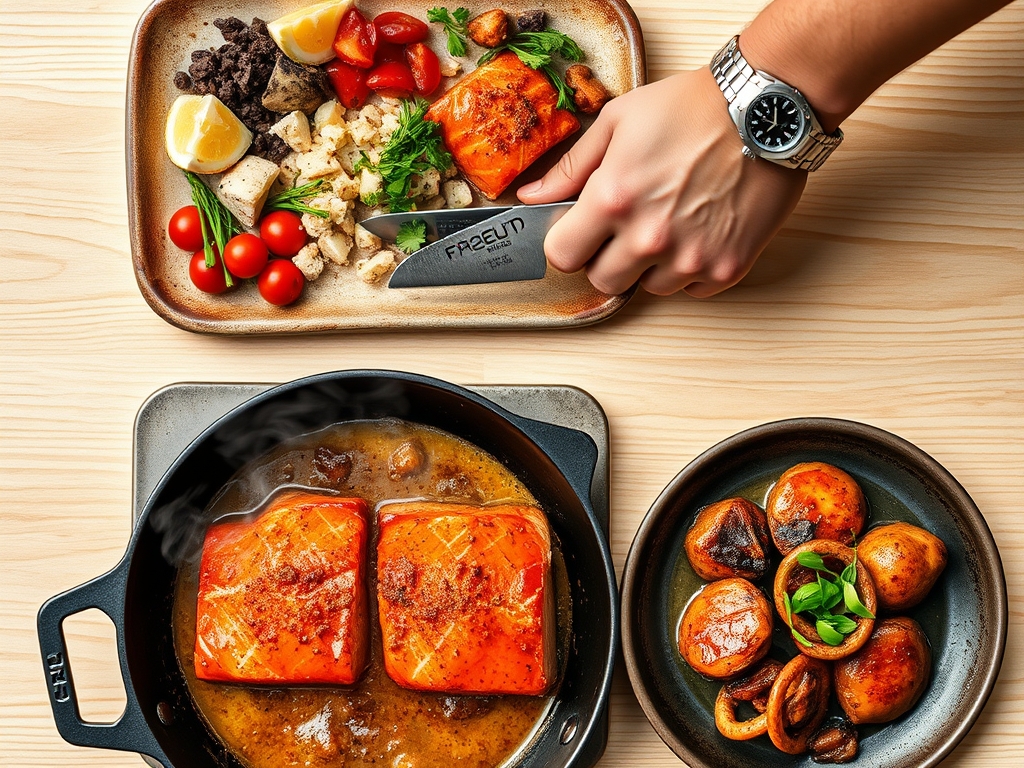
The Masterclass
1. The High-Heat Flash
Preheat your oven to 425 degrees Fahrenheit. Place the frozen fillets on a rimmed baking sheet lined with parchment paper. Do not season yet; the ice crystals will just wash the salt away.
Pro Tip: This initial blast of heat utilizes sublimation, turning surface ice directly into vapor. This prevents the fish from poaching in its own meltwater, which often leads to a mushy texture.
2. The Rinse and Dry
After five minutes in the oven, use tongs to remove the tray. Quickly rinse the fillets under cold water to remove any "white stuff" (albumin) that has surfaced, then pat them bone-dry with a paper towel.
Pro Tip: Removing surface moisture is essential for evaporative cooling control. If the surface is wet, the temperature cannot rise above 212 degrees Fahrenheit, preventing the browning process entirely.
3. The Lipid Barrier
Slather the now-defrosted surface with avocado oil or melted butter. Use a silicone pastry brush to ensure every millimeter is coated.
Pro Tip: Fats act as a thermal bridge, conducting heat more efficiently from the air into the flesh of the fish, ensuring the middle cooks at the same rate as the edges.
4. The Seasoning Anchor
Generously apply your kosher salt and cracked black pepper. Now that the surface is tacky with oil, the spices will actually stick.
Pro Tip: Salt acts as a denaturant, slightly breaking down the protein strands on the surface so they can trap more moisture during the final stage of cooking.
5. The Aromatic Infusion
Place thin lemon slices and smashed garlic cloves directly on top of the fillets. Slide the tray back into the oven for another ten to twelve minutes.
Pro Tip: This is called aromatic shielding. The lemon slices protect the delicate fats from direct radiant heat, preventing them from scorching while they infuse the meat with essential oils.
6. The Broiler Finish
Switch your oven to the "Broil" setting for the final two minutes. Watch it like a hawk.
Pro Tip: This triggers the Maillard reaction, a chemical dance between amino acids and reducing sugars that creates that savory, complex "browned" flavor profile we crave.
7. The Carryover Rest
Remove the salmon when the internal temperature hits 130 degrees Fahrenheit. Transfer it to a warm plate using a fish spatula.
Pro Tip: Thermal carryover will continue to cook the fish for several minutes after it leaves the oven. Resting allows the muscle fibers to relax and reabsorb juices, ensuring a succulent bite.
8. The Acid Brightener
Just before serving, use your microplane to grate fresh lemon zest over the top and add a final squeeze of juice.
Pro Tip: Acid acts as a flavor potentiate. It brightens the heavy fat molecules on your palate, making the natural sweetness of the salmon more pronounced.
9. The Texture Contrast
Top with toasted panko or crushed nuts for a final crunch.
Pro Tip: Incorporating a textural juxtaposition (crunchy vs. silky) sends a signal to the brain that the meal is highly palatable, increasing overall satisfaction.
The Deep Dive
Macro Nutrition: A standard six-ounce salmon fillet provides approximately 34 grams of high-quality protein and 15 grams of healthy fats. It is a powerhouse of Vitamin B12 and Selenium, which are vital for cognitive function and metabolic health.
Dietary Swaps:
- Keto: Double down on the fats by topping with a dollop of compound herb butter.
- Vegan: While this guide focuses on salmon, you can apply the high-heat roasting technique to thick slabs of "King Oyster" mushrooms or cauliflower steaks.
- GF: Ensure your seasonings are certified gluten-free and use crushed almonds instead of panko for the crust.
The Fix-It:
- Problem: The fish is dry. Fix: You likely skipped the "resting" phase. Next time, pull it 5 degrees earlier.
- Problem: Too much white goo (albumin). Fix: This happens when salmon is cooked too fast at the start. Use the "rinse and dry" hack in step two to manage it.
- Problem: The skin is soggy. Fix: Place the salmon on a wire cooling rack set inside the baking sheet to allow hot air to circulate underneath the fillet.
Meal Prep: To reheat, avoid the microwave at all costs; it turns fats into rubber. Instead, place the salmon in a saucier with a tablespoon of water or broth, cover it, and steam gently on the stovetop for three minutes to restore "day-one" silkiness.
The Wrap-Up
Mastering the art of frozen salmon recipes oven style is like having a culinary "easy button" that doesn't sacrifice quality for speed. By understanding the physics of heat transfer and the chemistry of the Maillard reaction, you can produce a meal that looks like it took hours but actually took less time than a sitcom episode. Go forth, grab those frozen fillets, and show your oven who is boss!
The Kitchen Table
Can you cook salmon from frozen in the oven?
Yes! By using a two-stage heating process, you can safely and deliciousy cook salmon from frozen. Start with a high-heat "thaw" phase for five minutes, then season and finish roasting until the internal temperature reaches 135 degrees Fahrenheit.
How long does frozen salmon take in the oven at 425?
Typically, frozen salmon takes 20 to 25 minutes at 425 degrees Fahrenheit. The first five minutes defrost the exterior, while the remaining 15 to 20 minutes cook the fillet through and develop a caramelized, savory crust on the outside.
Is it better to thaw salmon or cook from frozen?
While fresh is great, cooking from frozen preserves the cellular structure better than a slow, improper thaw. Using the oven-from-frozen method prevents "drip loss," ensuring the fats stay inside the fish for a much juicier, more flavorful result.
How do you keep frozen salmon from getting soggy?
The key is removing surface moisture. After the initial five-minute "flash" in the oven, remove the tray and pat the fillets completely dry with paper towels. This allows the heat to brown the fish rather than steaming it in meltwater.