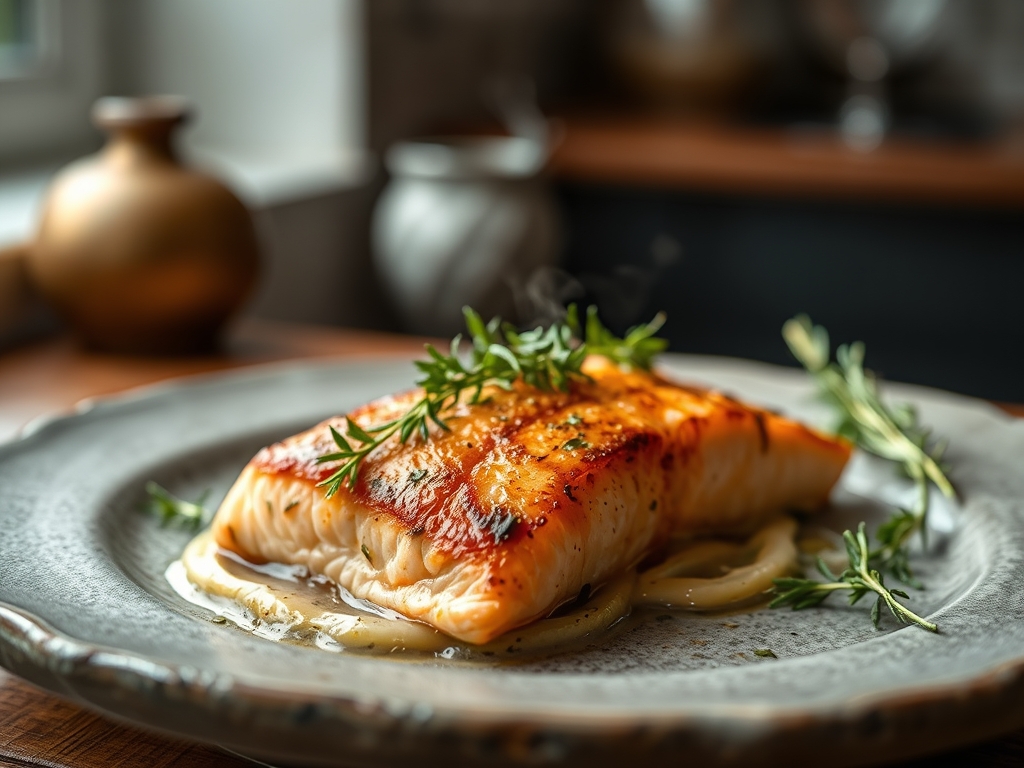
Imagine the sound of a heavy-bottomed stainless steel skillet meeting a cold flame; that sharp, metallic ring is the opening bell for the best meal of your week. You drop a cold knob of butter into the pan and watch it foam, the milk solids beginning to toast into a nutty, golden brown. This is the stage where herb salmon recipes transform from a basic weeknight staple into a masterclass in aromatic chemistry. We are not just cooking fish; we are orchestrating a sensory takeover where the piquant scent of toasted rosemary and the bright, citrusy lift of dill meet the rich, fatty silkiness of Atlantic salmon.
The secret to a restaurant-quality crust is not just heat; it is the strategic management of moisture and the careful infusion of volatile oils from your herb garden. When you press a sprig of thyme into the searing fat, you are triggering a process called lipid-mediated extraction. The fats in the pan act as a solvent, pulling the essential oils out of the herbs and bonding them directly to the protein fibers of the fish. By the time the skin hits the pan, the oil is already a flavored vehicle of deliciousness. Let us dive into the mechanics of making your kitchen smell like a Michelin-starred bistro.
The Gathers:
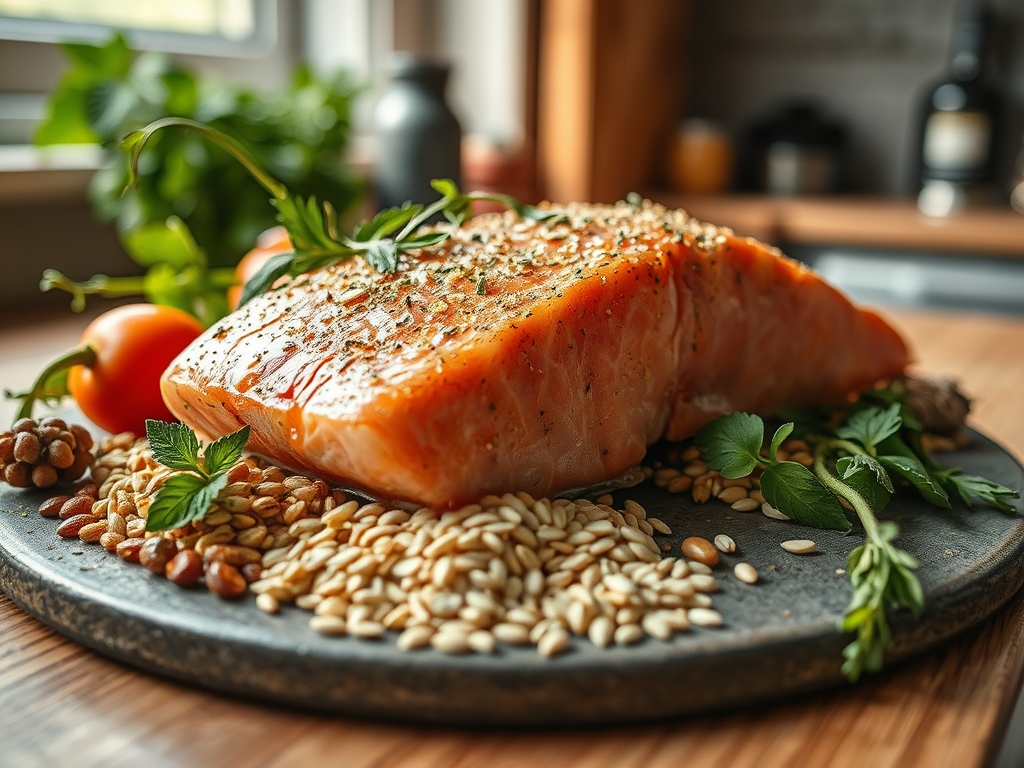
To execute these herb salmon recipes with precision, your mise-en-place must be airtight. Start with center-cut fillets, preferably with the skin on to protect the delicate flesh from aggressive thermal energy. You will need a high-quality microplane for zesting, a sharp chef's knife for chiffonade cuts, and a digital scale if you are tracking your macros with clinical accuracy.
The herb profile is your primary flavor engine. Gather fresh flat-leaf parsley for its clean, grassy notes; dill for its anise-like sweetness; and chives for a mild, sulfurous bite that mimics onion without the crunch. You will also need a high-smoke-point oil, such as avocado or grapeseed oil, to ensure you do not reach the acrid point of carbonization before the fish is cooked.
Smart Substitutions:
If fresh herbs are unavailable, use a 1:3 ratio of dried to fresh, but be warned that dried herbs lack the volatile aromatic compounds found in fresh leaves. For a keto-friendly crust, swap traditional breadcrumbs for crushed macadamia nuts mixed with minced rosemary. If you are avoiding dairy, a high-quality ghee provides the same Maillard-reaction benefits as butter without the lactose that can burn too quickly at high temperatures.
The Clock
Efficiency in the kitchen is dictated by the Chef's Flow. This is the mental map of your cooking process that minimizes downtime and ensures every component reaches the plate at the thermal peak. For these herb salmon recipes, your total active time is approximately 12 minutes, with a 5-minute buffer for prep.
- The Prep (5 Minutes): Pat the fish dry. Moisture is the enemy of the Maillard reaction. Use this time to mince your herbs and zest your citrus.
- The Sear (4 Minutes): This is the high-intensity phase. Do not move the fish once it hits the pan; let the proteins denature and form a structural crust.
- The Baste (2 Minutes): Lower the heat and add your aromatics. This is the "flavor finishing" stage.
- The Rest (2 Minutes): Carryover cooking is a scientific certainty. Removing the fish at 125 degrees Fahrenheit allows it to reach a perfect 130-135 degrees on the plate, ensuring the albumin (the white protein) does not leak out and leave the fish dry.
The Masterclass
1. The Desiccation Ritual
Use a paper towel to press every microscopic drop of water off the skin. A dry surface allows the heat to immediately begin the Maillard reaction rather than wasting energy evaporating surface water.
Pro Tip: This prevents "steaming" the fish. If moisture remains, the temperature cannot rise above 212 degrees Fahrenheit, which is too low for browning.
2. The Chiffonade Technique
Stack your soft herbs (like basil or mint), roll them tightly into a cigar shape, and slice thin ribbons. This minimizes bruising and keeps the chlorophyll intact, ensuring a vibrant green color rather than a muddy brown.
Pro Tip: Using a dull knife crushes the cell walls, causing the enzymes to oxidize the herb almost instantly. Keep your blade honed.
3. The Cold-Start Infusion
Place your hard herbs (rosemary, thyme) into the oil while the pan is still warming up. This allows the heat to gently render the essential oils without scorching the delicate leaves.
Pro Tip: Volatile aromatics are heat-sensitive. Starting cold ensures the oil is fully saturated with flavor before the salmon even touches the surface.
4. The Weight Press
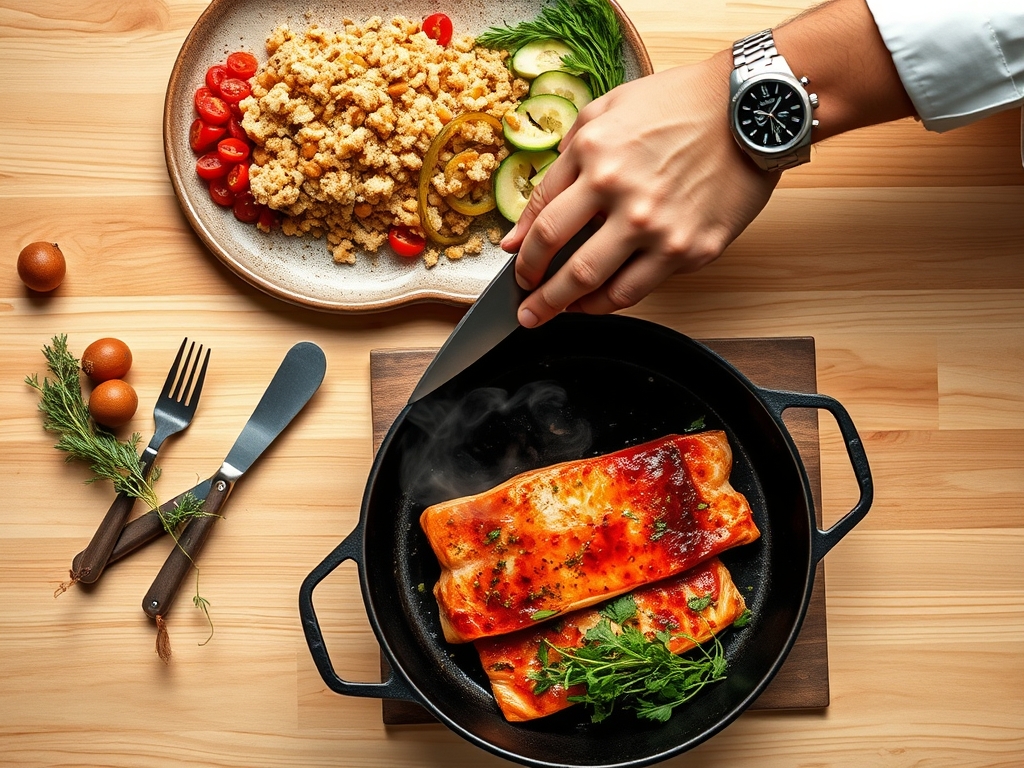
Once the salmon is skin-side down, use a flexible fish spatula or a small weight to press the fillet flat for the first 30 seconds. Salmon skin tends to curl when the collagen fibers contract under heat.
Pro Tip: Consistent surface contact ensures an even, glass-like crispness across the entire skin surface.
5. The Butter Baste (Arrosage)
Tilt the pan toward you so the hot, herb-infused fat pools at the bottom. Use a large spoon to rapidly shower the top of the fish with the liquid. This is called arrosage.
Pro Tip: This technique uses convection to cook the top of the fish gently while the bottom continues to sear, creating a gradient of textures.
6. The Acid Flash
Just before removing the pan from the heat, squeeze fresh lemon juice into the fat. The acid will deglaze the pan and create a light, emulsified sauce with the herb-flecked butter.
Pro Tip: Acid cuts through the heavy lipids of the salmon, providing a "bright" finish that balances the palate.
7. The Thermal Rest
Transfer the salmon to a warm plate, not a cold one. Cover it loosely with foil to allow the internal juices to redistribute through the muscle fibers.
Pro Tip: Cutting into the fish immediately causes the expanded juices to rush out, resulting in a dry mouthfeel. Resting allows the protein structure to "relax."
8. The Micro-Garnish
Add a final sprinkle of raw, minced herbs and flaky sea salt just before serving. This provides a "top note" of fresh fragrance that hits the nose before the first bite.
Pro Tip: Fresh herbs added at the end provide enzymatic brightness that cooked herbs lose during the heating process.
The Deep Dive
From a nutritional standpoint, herb salmon recipes are a powerhouse of Omega-3 fatty acids and high-quality protein. A standard 6-ounce fillet provides roughly 34 grams of protein and 18 grams of healthy fats. By focusing on herbs rather than heavy creams, you keep the caloric density low while maximizing the micronutrient profile.
Dietary Swaps:
For a vegan alternative, apply these herb-infusion techniques to a thick "steak" of cauliflower or firm tofu. For those on a strict Keto diet, increase the butter baste and add a side of herbed hollandaise. All ingredients in this guide are naturally gluten-free.
The Fix-It:
- Skin is sticking: You likely tried to flip it too early. Protein bonds to the pan initially; wait for adhesion release, which happens naturally once the crust forms.
- White gunk (Albumin) appearing: The heat is too high. This protein pushes out when the muscle fibers contract too violently. Lower the flame.
- Bitter herbs: You burned the garlic or rosemary. If the fat turns dark brown/black, wipe the pan and start the baste over.
Meal Prep Science:
To reheat salmon without it becoming "fishy," avoid the microwave. The high-frequency waves agitate the fats and create oxidized flavors. Instead, use a low oven (275 degrees) with a splash of water and a tight foil lid to re-vaporize the moisture into the flesh.
The Wrap-Up
Mastering herb salmon recipes is about more than just following a timer; it is about understanding the physics of the pan and the chemistry of the garden. When you balance the heavy, savory fats of the fish with the volatile, ethereal notes of fresh herbs, you create a dish that is both grounding and sophisticated. Put your tools to work, trust your senses, and remember that the best ingredient in any kitchen is a curious mind. Now, go get that perfect sear!
The Kitchen Table
How do I keep the salmon skin from sticking?
Ensure the pan is hot and the skin is bone-dry. Use a high-smoke-point oil and do not attempt to flip the fish until the protein naturally releases from the surface after a golden crust has formed.
Can I use dried herbs for these recipes?
Yes, but use one-third the amount. Dried herbs are more concentrated but lack the "bright" aromatic lift. Rehydrate them in the cooking oil for sixty seconds before adding the fish to unlock their dormant flavors.
What is the best temperature for cooked salmon?
For a moist, flakey texture, aim for an internal temperature of 130 to 135 degrees Fahrenheit. This is considered medium-rare to medium. Anything above 145 degrees will result in a dry, chalky consistency.
Why does my salmon have white stuff on it?
That is albumin, a harmless protein that extrudes when the fish is cooked too fast or too long. To minimize it, cook the salmon gently and avoid aggressive temperature spikes during the searing process.
Which herbs pair best with salmon?
Dill, parsley, and chives are the classic "soft" herb trio. For a woodier, more robust flavor, use rosemary or thyme. Mint and cilantro offer a global, refreshing twist when paired with lime instead of lemon.