
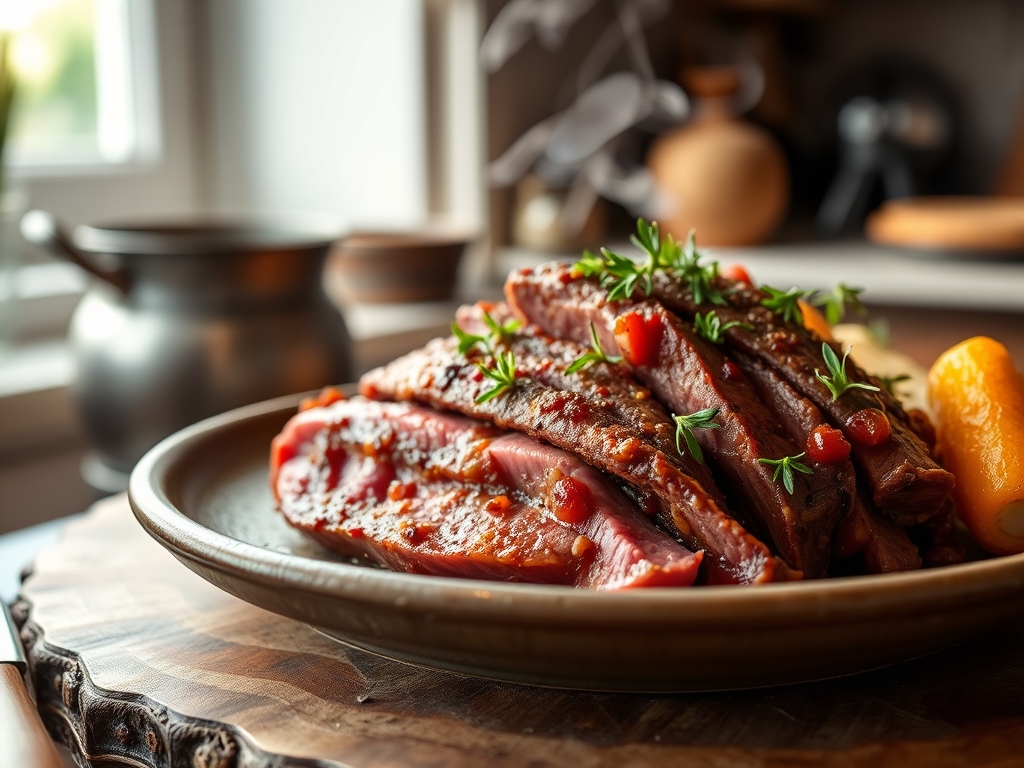
Picture the scene: it is a rainy Tuesday, and your kitchen is currently a sanctuary of salt, spice, and the low, steady hum of slow heat. You are chasing that elusive, fork-tender texture that separates a mediocre meal from the legendary status of the best slow cooker corned beef recipes. We are talking about brisket that yields to the slightest pressure of a fork, bathed in a piquant broth that has spent hours coaxing out every ounce of collagen. Most people treat the slow cooker like a culinary junk drawer, but you and I know better. This is a vessel for controlled thermal denaturation. We are not just boiling meat; we are conducting a low-frequency symphony of flavor. By the time we are done, your home will smell like a high-end Dublin gastropub, and you will have mastered the delicate balance between salt-cured intensity and the sweet, earthy notes of root vegetables. Grab your favorite apron and a heavy-bottomed skillet for the prep work; we are about to elevate a humble brisket into a masterpiece of textural perfection.
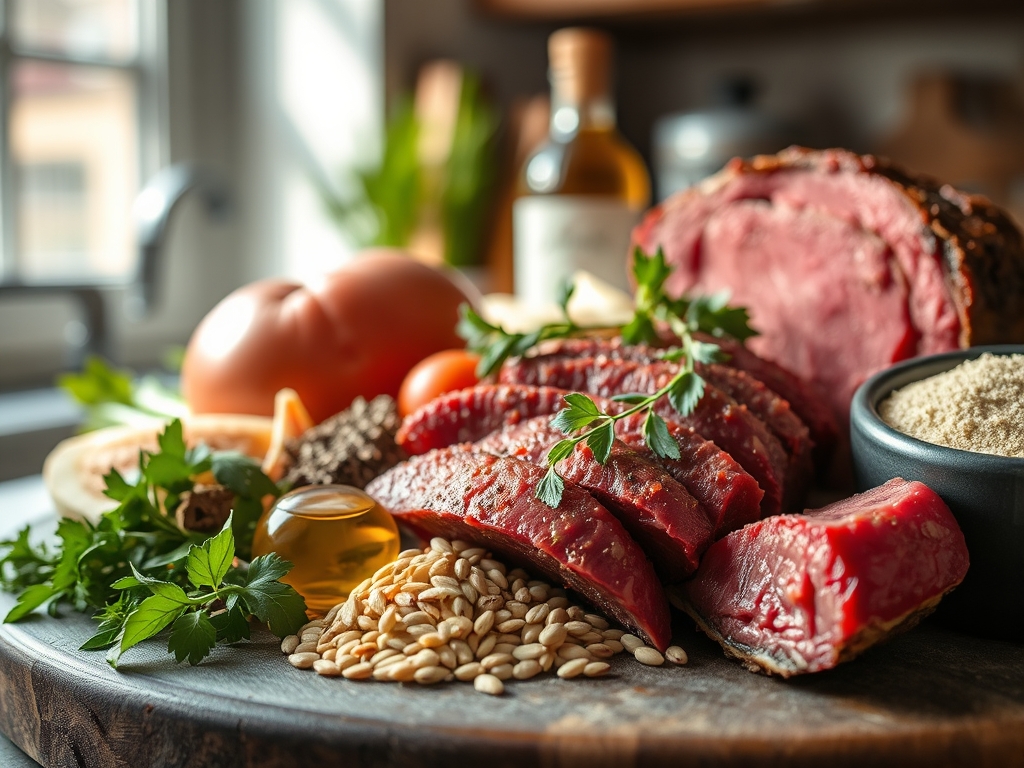
The Gathers:
To achieve the best slow cooker corned beef recipes, your mise-en-place must be precise. Start with a three to four pound corned beef brisket, preferably the point cut for its higher fat content which ensures a more viscous mouthfeel. You will need a quart of high-quality beef bone broth, which provides a richer protein structure than standard stock. Gather your aromatics: four cloves of garlic crushed with a microplane to release their essential oils, one large yellow onion roughly chopped, and three large carrots. For the spice profile, look beyond the little plastic packet. We are adding whole black peppercorns, mustard seeds, and two dried bay leaves to infuse the liquid with depth.
Smart Substitutions are your secret weapon here. If you find the traditional brine too aggressive, you can swap half of the beef broth for a dark Irish stout. The sugars in the beer will deglaze the pan during the searing phase and provide a complex, malty backbone to the final sauce. For those avoiding nightshades, replace the traditional potatoes with parsnips or celery root; they hold their structural integrity better over long cook times and offer a sophisticated, nutty profile. Always use a digital scale to weigh your brisket, as this determines your exact thermal trajectory.
The Clock: Chef's Flow
Efficiency in the kitchen is about managing the "Chef's Flow." Your active prep time is a brisk twenty minutes. This involves the searing, the vegetable prep, and the layering. The passive cooking time is where the magic happens; six hours on the "High" setting or ten hours on "Low." I always advocate for the "Low" setting. This slower rise in temperature prevents the muscle fibers from seizing, ensuring the collagen transforms into gelatin without the meat becoming stringy. Allow for a twenty-minute resting period post-cook. This is non-negotiable for moisture retention.
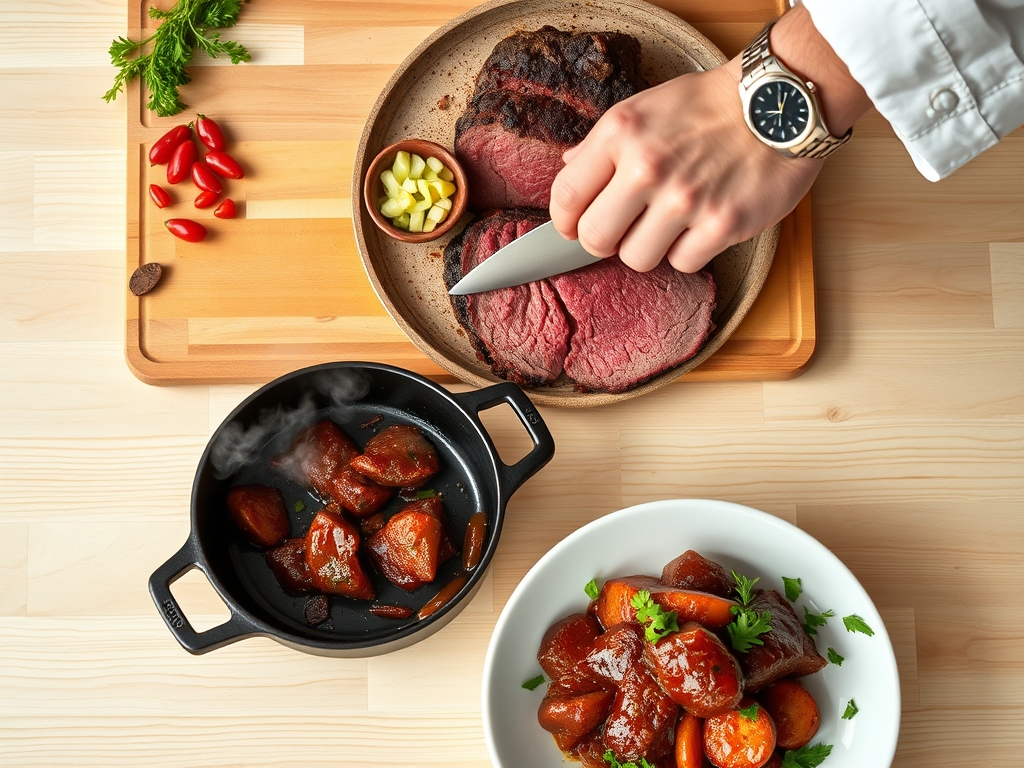
The Masterclass:
1. The Maillard Sear
Before the brisket ever touches the slow cooker, pat it bone-dry with paper towels. Heat a heavy-bottomed skillet over medium-high heat with a tablespoon of high-smoke-point oil. Sear the brisket for three minutes per side until a deep, mahogany crust forms.
Pro Tip: This is the Maillard Reaction in action. By creating these complex sugar-protein bonds on the surface, you develop a depth of flavor that a slow cooker cannot achieve alone due to the presence of steam.
2. Deglazing the Foundation
Remove the meat and use a splash of broth to deglaze the skillet. Use a bench scraper or wooden spoon to lift the browned bits (the fond) from the bottom of the pan. Pour this liquid gold directly into your slow cooker crock.
Pro Tip: These browned bits contain concentrated umami. Incorporating them into the cooking liquid ensures the flavor is distributed through the meat via osmosis during the long simmer.
3. Strategic Layering
Place your onions and garlic at the bottom of the crock to act as a thermal buffer. Set the brisket on top, fat-side up. This allows the fat to render and baste the meat naturally as it cooks. Add your spices and pour the liquid around the sides, not directly over the meat, to keep the crust intact.
Pro Tip: Fat-side up positioning utilizes gravity. As the lipids melt, they permeate the lean muscle fibers, preventing the meat from drying out in the humid environment.
4. The Vegetable Timing
Do not add your cabbage and potatoes at the start. Wait until there are only ninety minutes left on the clock. Submerge the potatoes in the liquid, but nestle the cabbage wedges on top so they steam rather than turn to mush.
Pro Tip: Vegetables have different cellular structures than meat. Adding them too early results in "over-extraction," where they lose all texture and flavor to the broth.
5. The Rest and Carve
Once the internal temperature reaches 190 degrees Fahrenheit on a digital thermometer, remove the brisket using tongs. Place it on a cutting board and tent it loosely with foil for twenty minutes. Slice against the grain using a sharp carving knife.
Pro Tip: This period allows for thermal carryover. The internal juices, which were pushed to the center by heat, redistribute to the outer edges, ensuring every bite is succulent.
6. The Glaze Finish (Optional)
For a professional touch, whisk a tablespoon of honey and grainy mustard in a saucier. Brush this over the rested meat and pop it under a broiler for two minutes until it bubbles and caramelizes.
Pro Tip: This adds a final layer of enzymatic browning and a sweet counterpoint to the salt-cured meat, creating a complex flavor profile.
The Deep Dive:
From a macro nutrition perspective, corned beef is a powerhouse of protein and B vitamins, though it is high in sodium. To balance this, ensure you are serving it with plenty of fibrous cabbage. For a Keto-friendly version, simply omit the potatoes and double the cabbage and carrots. If you are looking for a Vegan alternative, the same "slow and low" technique works beautifully with large wedges of red cabbage or "steaks" of celery root seasoned with pickling spice and liquid smoke.
The Fix-It: If your meat is tough, it simply hasn't cooked long enough; put it back in for another hour. If the broth is too salty, add a peeled, raw potato for the last thirty minutes to absorb excess sodium. If the flavor feels flat, add a teaspoon of apple cider vinegar at the end to aerate the palate with acidity. For meal prep, reheat slices in a pan with a splash of the leftover cooking liquid to maintain "day-one" moisture.
The Wrap-Up:
You now hold the keys to the kingdom of the best slow cooker corned beef recipes. By focusing on the science of searing, the precision of layering, and the patience of the rest, you have transformed a standard Sunday dinner into a culinary event. This is more than just a recipe; it is a masterclass in flavor extraction. Go forth, use your tongs with confidence, and enjoy the most tender brisket of your life!
The Kitchen Table:
How do I keep my corned beef from being tough?
Toughness usually means the collagen hasn't fully broken down into gelatin. Ensure you cook the brisket on the "Low" setting for at least eight to ten hours. Patience is the primary ingredient for a fork-tender result.
Should I cook corned beef fat side up or down?
Always cook fat side up. This allows the fat to render and naturally baste the meat as it cooks. Gravity helps the moisture and flavor permeate the muscle fibers, preventing the brisket from becoming dry or stringy.
Can I overcook corned beef in a slow cooker?
Yes. While slow cookers are forgiving, leaving the meat in too long will eventually cause the muscle fibers to disintegrate into a mushy texture. Aim for an internal temperature of 190 to 200 degrees Fahrenheit for the perfect slice.
Do I need to wash the corned beef before cooking?
Rinsing the brisket under cold water is recommended to remove excess surface brine and salt. This prevents the final dish from being overly salty and allows the flavors of your added aromatics and spices to shine through clearly.