
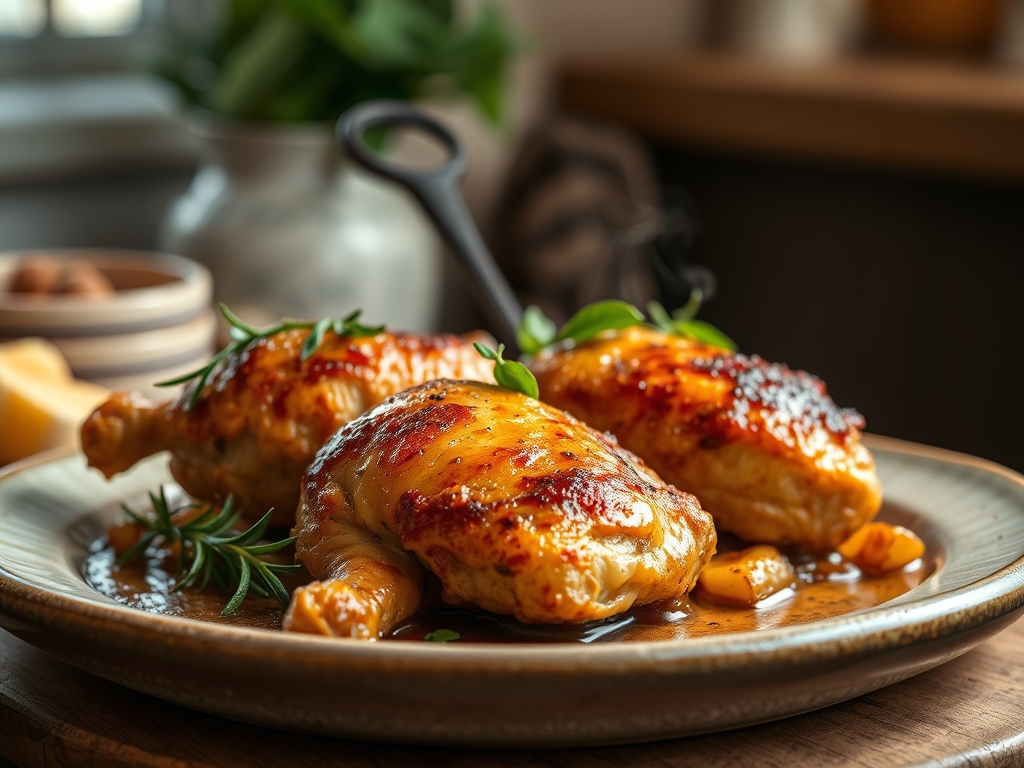
The oven door cracks open and a wave of golden, caramelized heat floods the kitchen, carrying notes of browned butter, roasted garlic, and crackling skin. Baked chicken delivers that perfect intersection of hands-off simplicity and dinner table impact, and mastering baked chicken recipes for dinner means you're always 45 minutes away from a meal that looks like you spent hours in the kitchen. The magic lies in high heat, strategic seasoning, and understanding how dry oven air transforms poultry into something crisp, juicy, and infinitely adaptable across nine distinct flavor profiles.
The Gathers
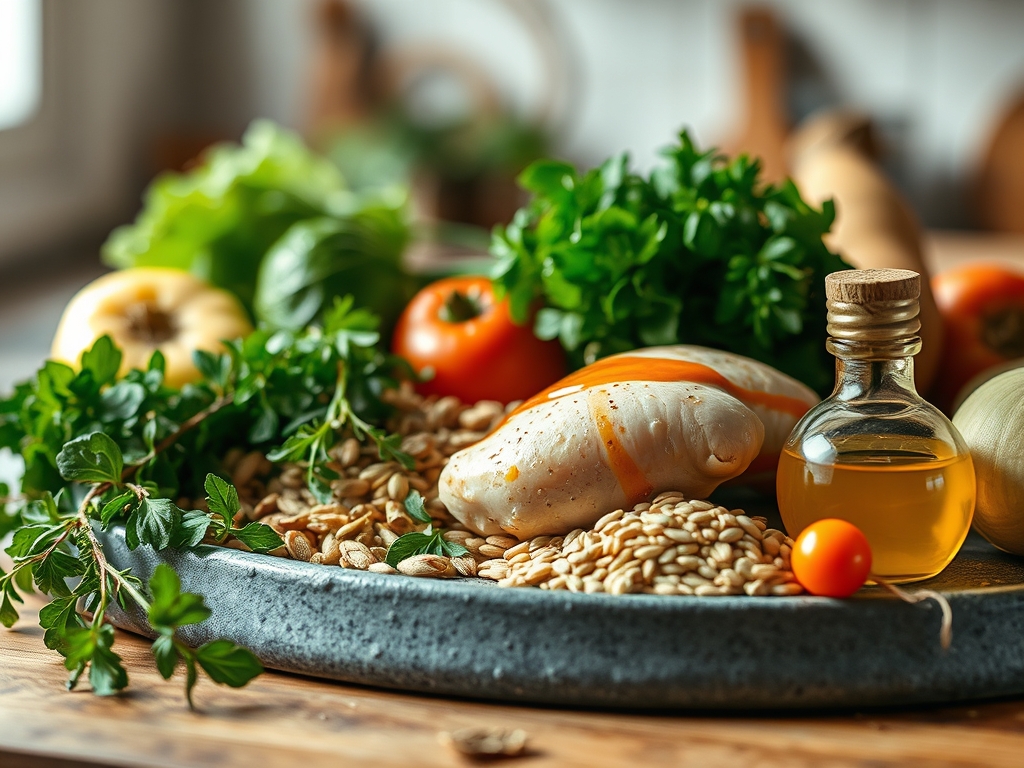
As you see in the ingredient spread below, the foundation starts with bone-in, skin-on chicken thighs or breasts (1.5 kg total), their marbled fat ready to self-baste during the roast. Kosher salt (2 tablespoons) sits alongside freshly cracked black pepper (1 tablespoon), while neutral oil (3 tablespoons) glistens next to unsalted butter (60 grams), softened to room temperature for even distribution. Fresh garlic cloves (8, smashed), lemon halves (2), and a bundle of thyme sprigs anchor the aromatics station.
The spice battalion includes smoked paprika (2 teaspoons), ground cumin (1 teaspoon), and chili flakes (1/2 teaspoon), with honey (3 tablespoons) and Dijon mustard (2 tablespoons) waiting to build glazes. Onions (2 medium, quartered) and baby potatoes (500 grams, halved) provide the vegetable underpinning that soaks up rendered fat and caramelized juices.
Smart Substitutions: Swap thighs for drumsticks if you want more surface area for crust development. Replace butter with ghee for a nuttier, lactose-free option. Use maple syrup instead of honey for a darker, mineral-rich sweetness. Bone-in cuts are non-negotiable here, brining structural integrity and moisture insurance that boneless pieces simply can't match.
The Clock
Prep Time: 15 minutes
Cook Time: 42 minutes
Total Time: 57 minutes
Chef's Flow: While the oven preheats to 220°C (425°F), dry-brine your chicken by salting it and letting it rest on a wire rack for 10 minutes. This window allows surface moisture to evaporate, creating the foundation for Maillard browning. Use those minutes to prep aromatics, mix your glaze, and arrange vegetables on the sheet pan. The moment the chicken hits the oven, set a timer for 28 minutes before the first temperature check. Carryover cooking will add another 2-3°C, so pull at 72°C (162°F) internal for a final rested temp of 74°C (165°F).
The Masterclass
Step 1: The Dry-Brine Foundation
Pat chicken completely dry with paper towels, then season aggressively with kosher salt on all surfaces. Let rest uncovered at room temperature for 10 minutes.
Why It Works: Salt draws moisture to the surface via osmosis, then dissolves and migrates back into the meat, seasoning deeply while dehydrating the skin for maximum crispness.
Step 2: The Fat Cap
Rub softened butter under the skin, separating it gently from the breast meat without tearing. Massage neutral oil onto the exterior skin.
Chef's Secret: Sub-dermal butter melts directly into the meat, creating a self-basting system, while external oil raises the smoke point and prevents scorching during the high-heat blast.
Step 3: The Flavor Matrix
Combine smoked paprika, cumin, chili flakes, and black pepper. Dust evenly over oiled chicken. Tuck garlic cloves and thyme sprigs underneath.
Why It Works: Fat-soluble flavor compounds in spices need lipids to bloom. The butter and oil act as carriers, distributing aromatics throughout the meat as they render.
Step 4: The Vegetable Raft
Scatter onions and potatoes on a sheet pan. Nestle chicken pieces skin-side up on top, leaving 2 cm space between each piece.
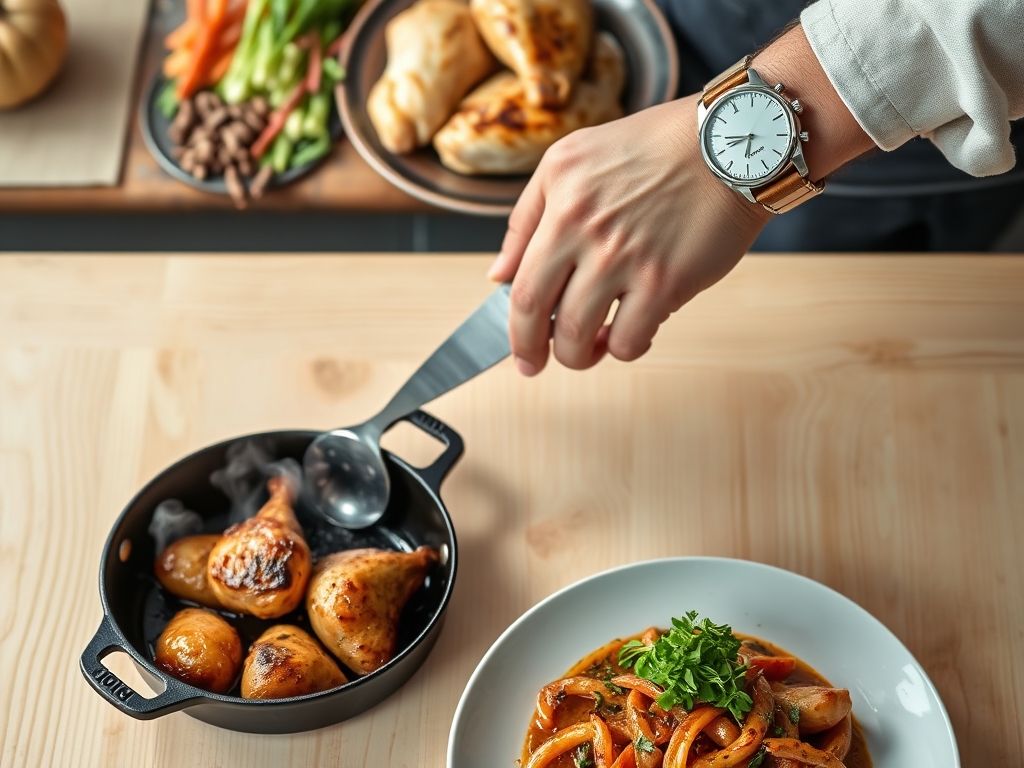
Chef's Secret: Note the texture shown in the step-by-step photos. Vegetables act as a roasting rack, allowing air circulation while catching drippings that would otherwise burn on bare metal.
Step 5: The High-Heat Sear
Roast at 220°C (425°F) for 22 minutes. Rotate pan 180 degrees.
Why It Works: Uneven oven heat creates hot spots. The rotation ensures uniform browning and prevents one side from carbonizing while the other remains pale.
Step 6: The Glaze Cascade
Whisk honey and Dijon mustard. Brush onto chicken at the 28-minute mark. Return to oven for 14 minutes.
Chef's Secret: Sugars in honey caramelize rapidly above 150°C. Adding the glaze too early results in bitter char; too late means no lacquered crust.
Step 7: The Thermal Rest
Remove when thickest part reads 72°C (162°F). Tent loosely with foil for 8 minutes.
Why It Works: Myosin proteins relax during rest, reabsorbing juices that would otherwise flood the cutting board. Carryover heat finishes the cook without drying the exterior.
Nutritional Info
Per serving (based on 6 portions):
Calories: 420 | Protein: 38g | Fat: 24g (8g saturated) | Carbohydrates: 18g | Fiber: 2g | Sodium: 680mg
The bone-in format increases collagen content, which hydrolyzes into gelatin during roasting, adding body to pan juices and supporting joint health. Skin-on preparation triples the fat content but also delivers fat-soluble vitamins A, D, and K.
Dietary Swaps
Keto Adaptation: Eliminate honey and potatoes. Replace with cauliflower florets and use a sugar-free hot sauce glaze. Macros shift to 6g net carbs per serving.
Gluten-Free: Already compliant. Verify Dijon mustard contains no malt vinegar.
Whole30: Swap honey for date paste blended with water. Omit butter in favor of ghee or coconut oil.
Vegan Pivot: Use king oyster mushrooms sliced lengthwise, scored in a crosshatch, brushed with miso-butter, and roasted at the same temperature for 30 minutes. The umami depth mirrors chicken's savory complexity.
Serving & Presentation
Rustic Family Style: Serve directly from the sheet pan, garnished with torn parsley and lemon wedges. The charred edges and glistening vegetables need no plating artifice.
Restaurant Precision: Slice breast meat on the bias, fan over a smear of whipped potato puree, drizzle with reduced pan juices, and accent with microgreens.
Grain Bowl Architecture: Shred chicken and layer over farro or quinoa with roasted vegetables, pickled onions, and tahini drizzle for a deconstructed approach.
The Pro-Dodge
Pitfall 1: Soggy Skin. Crowding the pan traps steam. Fix: Use two pans or roast in batches, maintaining that critical 2 cm air gap.
Pitfall 2: Dry Breast Meat. White meat cooks faster than dark. Fix: Start thighs 8 minutes before breasts, or butterfly breasts to equalize thickness.
Pitfall 3: Burnt Glaze. Sugar-based glazes scorch above 200°C. Fix: Drop oven to 190°C (375°F) after applying glaze, or brush during the final 10 minutes only.
The Meal Prep Corner
Cool chicken to room temperature within 90 minutes, then refrigerate in airtight containers for up to 4 days. Reheat in a 175°C (350°F) oven for 12 minutes, not the microwave, to preserve skin texture.
Freezer Protocol: Wrap individual pieces in plastic, then foil. Freeze for up to 3 months. Thaw overnight in the fridge, then crisp skin under the broiler for 3 minutes before serving.
Day-One Quality Trick: Store pan juices separately and reheat them to a simmer. Drizzle over reheated chicken to rehydrate and refresh the glaze.
The Wrap-Up
Nine variations on this method mean you're never stuck in a dinner rut. Swap the spice blend for za'atar and sumac, go Nashville hot with cayenne-spiked butter, or pivot Mediterranean with oregano and olives. The technique stays constant, and the oven does the heavy lifting. Drop your favorite variation in the comments, because the best kitchens are built on shared wins and tweaked recipes.
The Kitchen Table
Can I use boneless chicken?
Yes, but reduce cook time to 26-30 minutes total. Boneless cuts lack the structural fat and collagen that keep bone-in pieces juicy, so watch internal temperature closely and pull at 70°C (158°F).
What if I don't have a sheet pan?
A cast-iron skillet or roasting dish works. Preheat the vessel in the oven for 5 minutes before adding chicken to jumpstart the sear on the underside.
How do I scale this for a crowd?
Use multiple sheet pans and stagger oven racks, rotating positions halfway through. Avoid stacking pans directly above each other, which blocks heat circulation.
Can I marinate overnight?
Salt-based dry brines work overnight (refrigerate uncovered). Acid-heavy wet marinades (lemon juice, vinegar) start denaturing protein after 4 hours, turning texture mushy.
Why is my chicken rubbery?
Overcooking past 77°C (170°F) causes myosin proteins to squeeze out moisture irreversibly. Invest in an instant-read thermometer and trust the numbers, not the clock.