
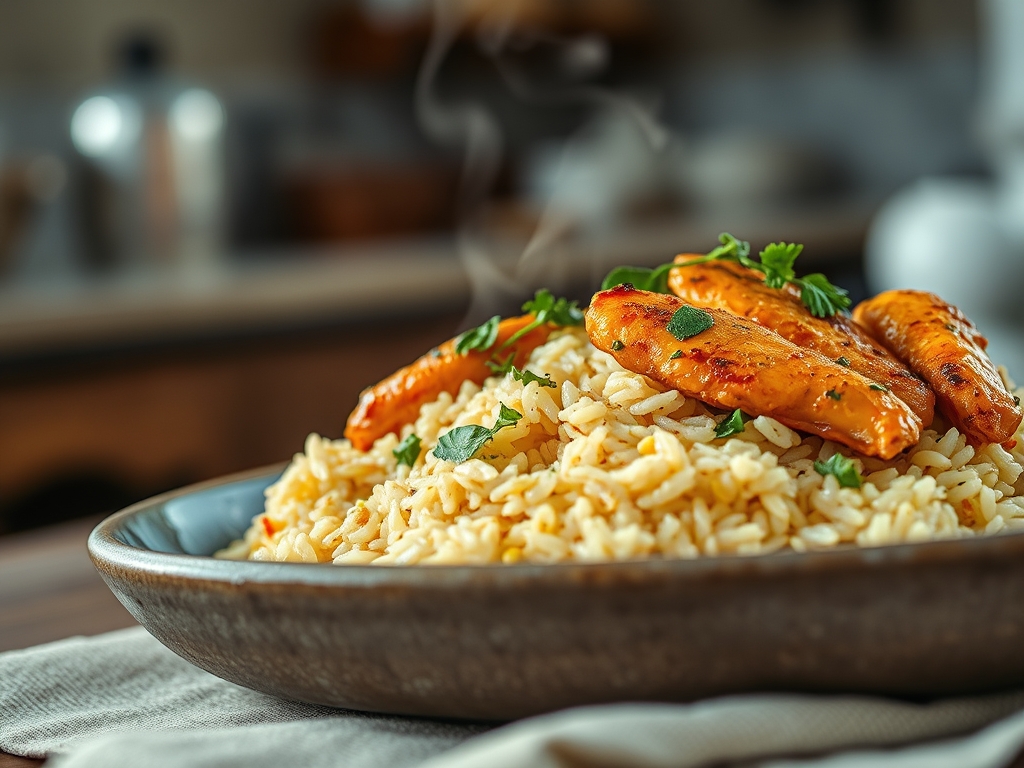
The first crack of chicken thighs hitting a screaming hot skillet releases a symphony of sulfur compounds, the Maillard reaction already browning edges to deep mahogany. Within seconds, the kitchen fills with the scent of caramelizing proteins while jasmine rice steams nearby, each grain swelling with moisture and starch. These seven rice and chicken recipes strip away the guesswork, delivering restaurant-caliber pairings in under 30 minutes. No fuss, no fifteen-ingredient lists, just smart technique and bold flavor combinations that work whether you're feeding two or meal-prepping for the week. Each pairing leverages a different cultural scaffold: Spanish, Japanese, Caribbean, Chinese, Mediterranean, Thai, and Persian, ensuring your weeknight rotation never stagnates.
The Gathers
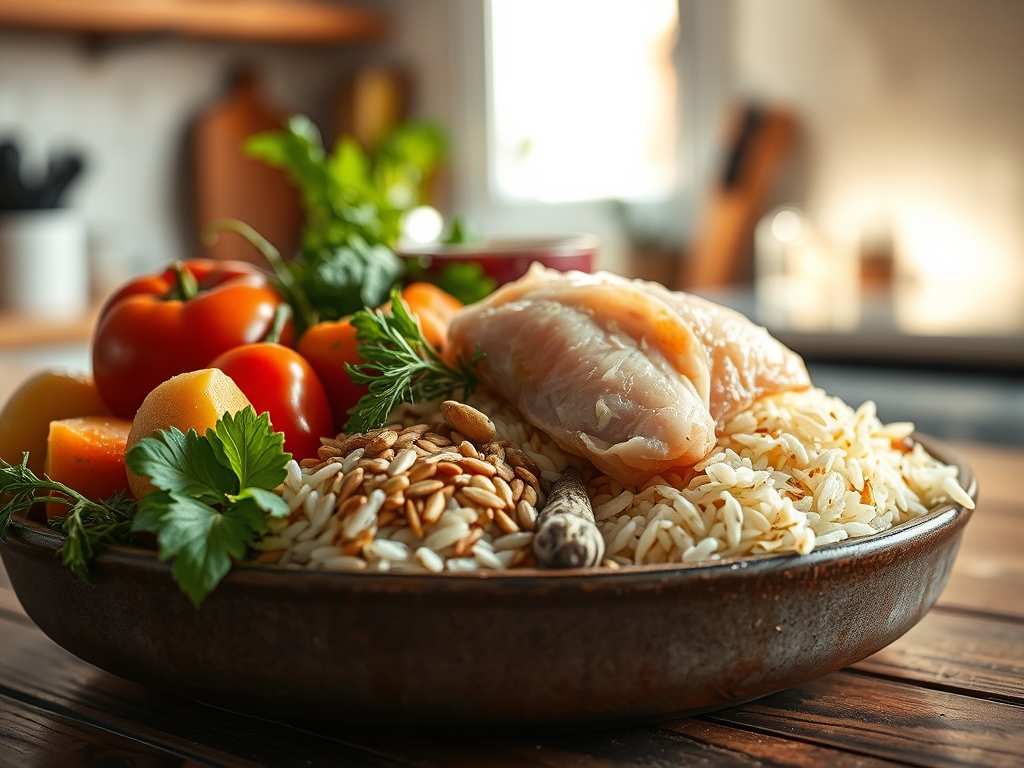
As you see in the ingredient spread below, the raw mise-en-place centers on boneless, skinless chicken thighs (1.5 lbs total), their marbling guaranteeing moisture even when overcooked by a minute or two. The rice selection matters: long-grain jasmine for Thai and Persian builds, short-grain sushi rice for Japanese, medium-grain bomba for Spanish, and standard basmati for everything else. Aromatics include garlic cloves (12 total, smashed), fresh ginger (3-inch knob, julienned), red onion (2 medium, sliced thin), and scallions (1 bunch, bias-cut). Acid comes from lime juice (4 limes), rice vinegar (1/4 cup), and lemon zest (2 lemons). Fats are ghee, toasted sesame oil, and extra-virgin olive oil.
Smart Substitutions: Swap chicken thighs for chicken breasts (reduce cook time by 3 minutes, brine in 3% salt solution for 20 minutes first). Replace jasmine with brown jasmine (add 10 minutes to steam time, increase liquid by 1/4 cup). For a pescatarian pivot, use firm white fish fillets (halibut or cod), searing 2 minutes per side only.
The Clock
Prep Time: 12 minutes (mise-en-place, rice rinsing, chicken trimming).
Cook Time: 18 minutes (simultaneous skillet work and rice steaming).
Total Time: 30 minutes from cold pan to plated dish.
Chef's Flow: Start your rice first in a dedicated pot with a tight lid (2:1 water-to-rice ratio, pinch of salt, brought to boil then dropped to lowest simmer). While the rice steams untouched for 15 minutes, season and sear your chicken in a preheated skillet. By the time the chicken rests (carryover cooking raises internal temp by 5°F), your rice finishes. This parallel processing eliminates dead time and keeps both components at peak temperature for service.
The Masterclass
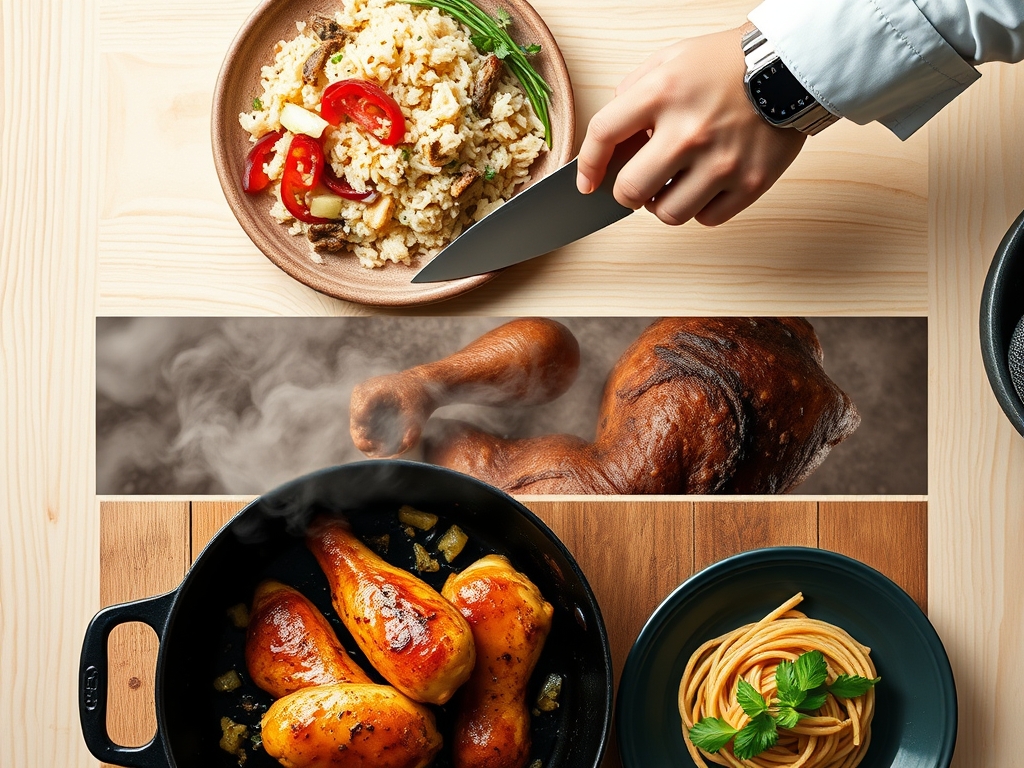
Step 1: Prep and Season the Chicken
Pat chicken thighs bone-dry with paper towels, then season aggressively with kosher salt (1 tsp per lb) and black pepper (1/2 tsp per lb) on both sides. Let them sit at room temperature for 10 minutes.
Chef's Secret: Dry surfaces = better Maillard. Moisture creates steam, which stalls browning below 300°F. Room-temperature meat cooks more evenly, reducing the gray band of overcooked protein around the edges.
Step 2: Sear the Chicken
Heat 2 Tbsp ghee or neutral oil in a 12-inch cast-iron skillet over medium-high (375-400°F surface temp). Lay thighs skin-side down (or smoothest side if skinless), press gently with a spatula for 10 seconds, then leave undisturbed for 5 minutes.
Why It Works: Constant flipping breaks the crust formation. Myoglobin and amino acids need sustained heat (above 285°F) to polymerize into that golden-brown lacquer. The press ensures full contact with the pan.
Step 3: Flip and Finish
Flip once, cook 4 more minutes, then check internal temp with an instant-read thermometer (target: 165°F at the thickest part). Remove to a cutting board, tent loosely with foil.
Chef's Secret: Carryover cooking adds 5-7°F during the rest. Pulling at 160°F prevents chalky, dry meat. The foil tent traps steam without creating a soggy crust.
Step 4: Build the Sauce in the Pan
Lower heat to medium, add 1 Tbsp minced garlic and 1 Tbsp grated ginger to the residual fat. Stir for 30 seconds until fragrant, then deglaze with 1/4 cup rice vinegar or lime juice, scraping up the fond.
Why It Works: The fond (those brown bits) is pure umami, concentrated glutamates from denatured proteins. Acid dissolves them into the sauce, adding depth no stock cube can replicate.
Step 5: Slice and Plate
Slice chicken against the grain into 1/2-inch strips. Note the texture shown in the step-by-step photos: clean cuts, no shredding, with visible moisture at the center.
Chef's Secret: Slicing against the grain shortens muscle fibers, reducing chew factor by up to 40%. Always use a sharp knife; a dull blade crushes cells, leaking juice onto the board instead of keeping it in the meat.
Step 6: Fluff and Finish the Rice
Remove rice lid, fluff with a fork (never a spoon, which smashes grains), then fold in 1 Tbsp butter or toasted sesame oil and a pinch of flaky salt.
Why It Works: Fat coats starch granules, preventing them from clumping as they cool. The fork aerates without breaking grains, maintaining that distinct, fluffy texture.
Step 7: Combine and Garnish
Plate rice first, shingle chicken slices on top, then drizzle pan sauce over everything. Finish with scallions, sesame seeds, cilantro, or lemon zest depending on your chosen pairing.
Nutritional Info
Per serving (1.5 cups rice, 5 oz chicken, 2 Tbsp sauce):
Calories: 520
Protein: 38g
Carbohydrates: 52g
Fat: 14g (saturated: 4g)
Fiber: 2g
Sodium: 680mg
Swap white rice for cauliflower rice to drop carbs to 12g and calories to 310. Use coconut aminos instead of soy sauce to reduce sodium by 40%.
Dietary Swaps
Vegan: Replace chicken with extra-firm tofu (pressed for 15 minutes, cubed, tossed in cornstarch, then pan-fried until crisp). Use vegetable stock in place of any pan drippings. The Maillard reaction still occurs on tofu surfaces thanks to reducing sugars and free amino acids.
Keto: Substitute rice with riced cauliflower or shirataki rice. Increase fat by adding 1/4 cup coconut cream to the sauce. Total net carbs drop to under 8g per serving.
Gluten-Free: Verify soy sauce is tamari (wheat-free). All other components are naturally gluten-free. Watch cross-contamination if using pre-packaged stocks or spice blends.
Serving & Presentation
Plating Idea 1 (Modern Minimal): Use a wide, shallow bowl. Spread rice in a thin, off-center circle. Lean chicken slices against the rice mound at a 45-degree angle. Drizzle sauce in a swoosh along the bowl's edge, garnish with micro cilantro.
Plating Idea 2 (Family Style): Mound rice on a large oval platter, create a shallow well in the center, fill with sauce. Arrange chicken slices in a shingle pattern radiating outward. Scatter toasted sesame seeds and scallion curls over the top.
Plating Idea 3 (Bento Inspired): Pack rice into a rectangular mold, unmold onto one side of a divided plate. Arrange chicken slices in a neat row on the opposite side. Add pickled vegetables (quick-pickled radish or cucumber) in a third compartment for acid balance.
The Pro-Dodge
Pitfall 1: Soggy Rice. You added too much water or lifted the lid during steaming. Fix: Spread rice on a sheet pan, bake at 300°F for 5 minutes to evaporate excess moisture. Next time, measure water precisely (2:1 ratio for white rice) and resist peeking.
Pitfall 2: Rubbery Chicken. You overcooked past 175°F or used chicken breast without brining. Fix: Slice thin, toss with sauce to rehydrate slightly. For future, always use a thermometer and pull at 160-165°F.
Pitfall 3: Bland Sauce. Not enough fond, or you used a non-stick pan that doesn't brown. Fix: Add 1 tsp fish sauce or soy sauce plus 1/2 tsp brown sugar to boost umami and balance. Always use stainless steel or cast iron for maximum browning.
The Meal Prep Corner
Storage: Cool chicken and rice separately within 2 hours. Store in airtight containers, rice on bottom, chicken on top (prevents rice from drying out). Refrigerate up to 4 days.
Reheating: Microwave on 50% power for 2 minutes, add 1 Tbsp water to the rice before heating. Or reheat rice in a covered skillet with 2 Tbsp water over low heat, stirring occasionally, then warm sliced chicken in the same pan for 1 minute per side. This method restores day-one texture far better than full-power nuking.
Freezing: Rice freezes well for 3 months (portion into 1.5-cup servings in freezer bags, flatten for fast thawing). Chicken can be frozen for 2 months but loses some moisture; toss with extra sauce after reheating.
The Wrap-Up
These seven pairings transform the weeknight staple into a rotating festival of technique and taste. Each method builds your intuition for heat control, sauce balance, and timing, skills that compound across every recipe you tackle. Whether you lean into the saffron-kissed Spanish build or the ginger-scallion Cantonese version, the core principles remain: dry surfaces for browning, precise doneness with a thermometer, and smart parallel cooking. Test one pairing this week, snap a photo, and share your results. The community learns faster when we cook together.
The Kitchen Table
Q: Can I use brown rice instead of white rice for these pairings?
A: Absolutely. Increase water to 2.5:1 and extend steam time to 25 minutes. Brown rice's bran layer requires more hydration and heat to gelatinize the starch. Texture will be chewier, nuttier, with a slight firmness even when fully cooked.
Q: What's the best way to prevent chicken from sticking to the pan?
A: Preheat the pan until a water droplet sizzles and evaporates in 1 second (around 375°F). Add fat, wait 10 seconds for it to shimmer, then lay chicken down gently. Don't move it for at least 3 minutes. Proteins release naturally once the Maillard crust forms.
Q: How do I make these rice and chicken recipes spicier without overpowering the other flavors?
A: Add heat in layers. Toast whole dried chilies in the pan before adding aromatics for smoky depth. Stir chili paste (sambal oelek or gochujang) into the sauce for concentrated heat. Finish with fresh sliced jalapeño or Thai bird chilies for brightness. Start with 1/2 tsp chili paste, taste, adjust.
Q: Can I cook the rice in chicken stock for more flavor?
A: Yes, replace water 1:1 with low-sodium chicken stock. The glutamates in stock add umami, but watch salt levels. If your stock is salted, skip the pinch of kosher salt you'd normally add to the rice water. The rice will take on a golden hue and deeper savory note.
Q: How do I know when my chicken is done without a thermometer?
A: Press the thickest part with your finger. If it feels like the fleshy base of your thumb when you touch your thumb to your middle finger (firm but with slight give), it's around 165°F. Clear juices, not pink, should run when pierced. That said, an instant-read thermometer ($15-25) removes all guesswork and is the single best upgrade for consistent results.