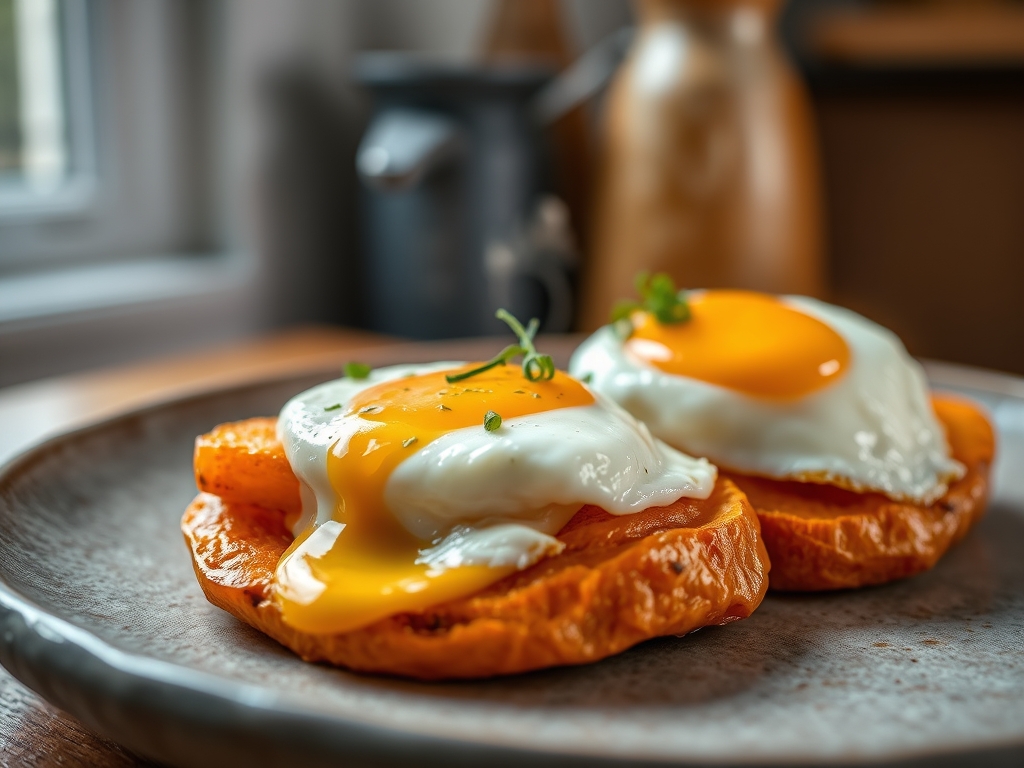
Imagine a kitchen bathed in the amber glow of a Saturday morning where the scent of caramelizing sugars meets the rich, savory aroma of sizzling protein. This is the sensory magic of egg and sweet potato recipes; a culinary marriage that balances complex carbohydrates with high-quality amino acids to fuel your busiest days.
The orange flesh of a garnet yam undergoes a profound transformation when exposed to heat. As the internal temperature rises, the starch molecules break down into maltose, creating a natural sweetness that perfectly offsets the creamy, sulfurous depth of a farm-fresh egg. It is not just breakfast; it is a masterclass in flavor equilibrium. Whether you are folding roasted cubes into a silken frittata or nesting a poached egg inside a twice-baked skin, these two ingredients represent the gold standard of nutrient density. We are moving beyond the basic scramble to explore textures ranging from the crisp, lacy edges of a sweet potato hash to the velvet crumb of a savory breakfast loaf. This guide will transform your pantry staples into gourmet fuel using precise techniques and a dash of kitchen chemistry.
The Gathers:
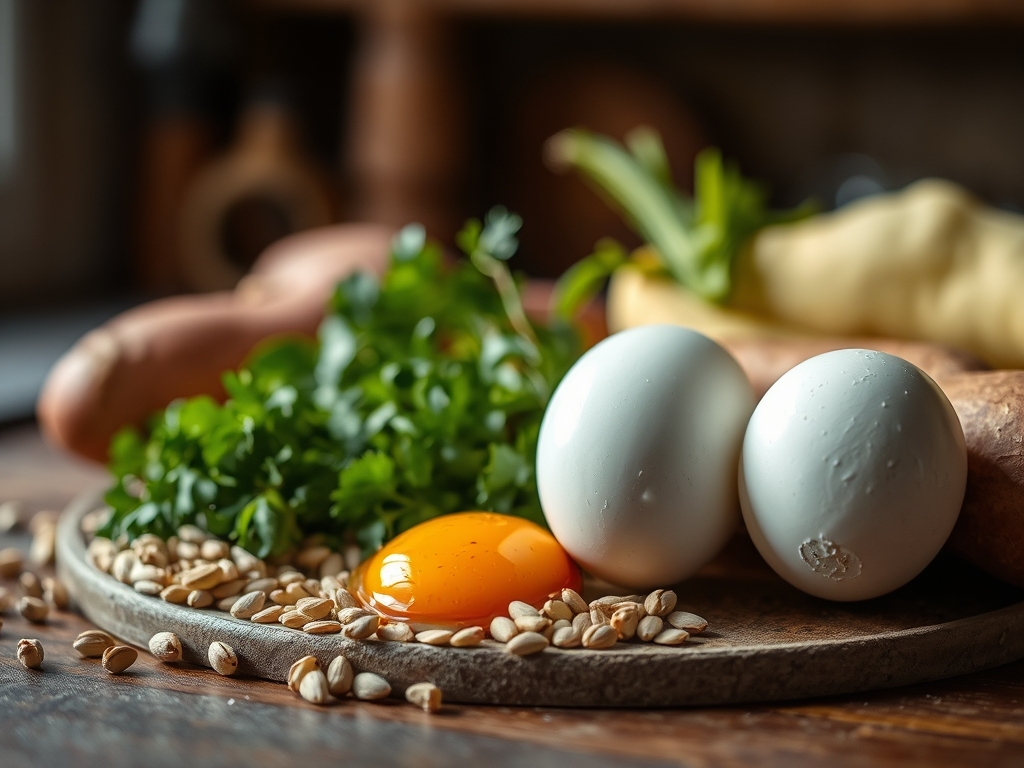
To execute these egg and sweet potato recipes with professional precision, your mise-en-place must be impeccable. Start with your tubers. Look for firm, heavy specimens; the weight indicates a high water content which prevents the flesh from becoming woody during the roasting process. You will need a heavy-bottomed skillet, preferably cast iron, to achieve the necessary heat retention for a superior sear.
For the eggs, freshness is non-negotiable. A fresh egg has a viscous albumen that holds its shape, whereas older eggs become watery and spread thin in the pan. Have your digital scale ready to ensure consistent ratios, especially when preparing batters or crusts. You will also want a microplane for grating hard cheeses or zesting citrus to provide a piquant finish to the earthy base.
Smart Substitutions:
If you find yourself without sweet potatoes, butternut squash offers a similar glycemic profile and texture. For a vegan-friendly swap in the base, use a chickpea flour slurry to mimic the binding properties of the egg. If you are looking to increase the healthy fats, swap standard butter for ghee; its higher smoke point allows you to render the potato skins to a shatteringly crisp finish without the milk solids burning.
The Clock: Chef's Flow
Efficiency in the kitchen is about understanding the "Chef's Flow." For most egg and sweet potato recipes, the total time investment is approximately 45 minutes, but the active labor is usually under 15. The secret lies in the staggered start.
The sweet potato is the marathon runner; it requires a longer lead time to soften its cellular structure. The egg is the sprinter, requiring mere minutes to reach the perfect soft-set or over-easy state. Always begin by prepping your tubers. While they undergo their thermal transformation in the oven or skillet, you can aerate your eggs, chop your aromatics with a sharp chef's knife, and clear your bench scraper of any debris. By the time the potatoes are fork-tender and golden, your eggs are ready to be introduced for the final, high-heat finish.
The Masterclass:
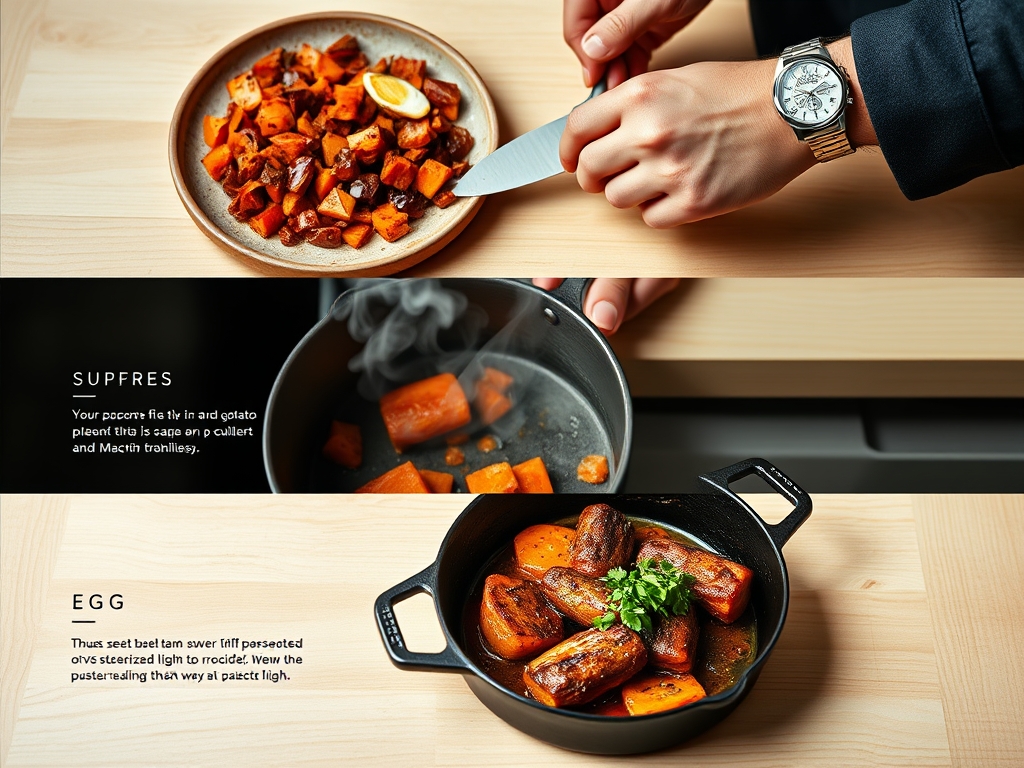
1. The Precision Dice and Roast
Begin by peeling and dicing your sweet potatoes into uniform half-inch cubes. Uniformity is the key to even cooking; stray pieces will burn before the larger chunks soften. Toss them in a high-heat oil like avocado oil and spread them across a preheated sheet pan.
Pro Tip: This stage utilizes the Maillard reaction, a chemical reaction between amino acids and reducing sugars that gives browned food its distinctive flavor. To maximize this, do not crowd the pan. If the potatoes are too close, they will steam instead of sear, resulting in a mushy texture.
2. The Infusion of Aromatics
While the potatoes roast, use a saucier or your skillet to sauté onions, garlic, or peppers. Use a moderate heat to infuse the oil with these flavors. Once the onions are translucent, deglaze the pan with a splash of apple cider vinegar or water to lift the browned bits from the bottom.
Pro Tip: Adding an acid like vinegar helps to break down the pectin in the vegetables, which allows them to soften while maintaining their structural integrity. It also provides a bright contrast to the heavy fats in the eggs.
3. The Emulsion and Pour
Whisk your eggs in a stainless steel bowl until no streaks of white remain. This incorporates air, which will expand during cooking to create a fluffier result. Gently fold your roasted potatoes and aromatics into the egg mixture.
Pro Tip: This is where emulsification occurs. The lecithin in the egg yolks acts as a bridge between the water-based egg whites and the fats from the cooking oil. A well-whisked egg creates a more stable matrix that holds the heavy potato cubes in suspension.
4. The Controlled Cook
Return the mixture to the skillet over medium-low heat. Use a heat-resistant spatula to gently move the curds from the edges toward the center. This ensures the eggs cook evenly without the bottom becoming tough or rubbery.
Pro Tip: Watch for thermal carryover. Eggs continue to cook for several minutes after being removed from the heat. Take the pan off the stove when the eggs still look slightly "wet" or underdone; the residual heat will finish the process perfectly on the plate.
The Deep Dive:
From a macro perspective, this pairing is a powerhouse. A single large egg provides roughly 6 grams of protein and a complete profile of essential amino acids. Sweet potatoes contribute a massive dose of Vitamin A and fiber, which slows the absorption of glucose and prevents the "sugar crash" associated with refined breakfasts.
Dietary Swaps:
For those following a Keto protocol, reduce the portion of sweet potato and increase the healthy fats by adding avocado or heavy cream to the eggs. Gluten-Free diners are naturally safe here, as both ingredients are inherently grain-free. For a Vegan alternative, a tofu scramble seasoned with turmeric and nutritional yeast provides a similar savory profile and protein density.
The Fix-It: Troubleshooting Common Pitfalls
- Soggy Potatoes: This usually happens due to overcrowding or low heat. Fix it by ensuring your pan is shimmering hot before adding the potatoes and giving them plenty of space.
- Rubbery Eggs: This is a result of overcooking. Fix it by using a lower heat setting and removing the pan from the burner 60 seconds earlier than you think you should.
- Bland Flavor: Sweet potatoes can be quite dominant. Fix it by using a piquant element like feta cheese, hot sauce, or a heavy dusting of smoked paprika to cut through the sweetness.
Meal Prep Science:
To maintain "day-one" quality when reheating, avoid the microwave if possible. The microwave agitates water molecules, which can make the eggs "weep" (a process called syneresis) and turn the potatoes into mush. Instead, use a toaster oven or a dry skillet to gently bring the dish back to temperature, which helps to re-crisp the potato edges.
The Wrap-Up:
Mastering egg and sweet potato recipes is about more than just following a set of instructions; it is about understanding how heat, fat, and acid interact to create a balanced plate. By focusing on techniques like the Maillard reaction and managing thermal carryover, you elevate simple pantry staples into a sophisticated, protein-rich meal. These dishes are versatile, vibrant, and scientifically designed to keep you satiated. So, grab your cast iron skillet and start experimenting; your best breakfast is only 45 minutes away.
The Kitchen Table:
Can I cook the eggs and sweet potatoes in the same pan?
Yes, but you must stagger them. Start the potatoes first since they require more time. Once they are tender and browned, add the eggs. This prevents the eggs from overcooking while the potatoes are still raw.
What is the best way to store leftovers?
Place leftovers in an airtight glass container and refrigerate for up to three days. Glass is preferable to plastic as it does not retain odors and allows for more even temperature distribution during the reheating process.
Why do my sweet potatoes turn brown before they are soft?
This is often caused by enzymatic browning or heat that is too high. To prevent this, you can parboil the potato cubes for three minutes before roasting, which neutralizes the enzymes and ensures a creamy interior.
Are sweet potato skins edible in these recipes?
Absolutely. The skins contain significant fiber and nutrients. When roasted at high heat with a bit of oil, they become incredibly crisp and add a delightful textural contrast to the soft, fluffy eggs.